
Email birders@birdquest-tours.com
Telephone 07777 186845
(International +44 7777 186845)
Email birders@birdquest-tours.com
Telephone 07777 186845
(International +44 7777 186845)
July 31, 2026
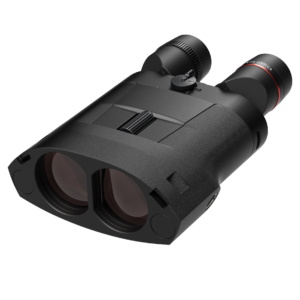
Kite Optics APC ED 14×50 image-stabilised binoculars
Some Birdquest guides have recently had the chance to try out the latest Kite Optics APC ED range of image-stabilised (IS) binoculars, and we have to say they are remarkable. For open country, wetland, coastal or pelagic birding, they are serious contenders, and in such situations often superior to top-end conventional binoculars.
From the outset, we want to stress that the commentary here concerns our conclusions following the use of Kite APC ED 14×50 binoculars in open environments. This model is not directly comparable with conventional, low-magnification binoculars in the popular 8-10x range, nor is it intended for predominantly forest or similar close up birding.
Firstly, why bother with comparatively bulky and yes, not very sleek-looking, image-stabilised binoculars in the first place? Our self-image as birders is surely influenced by slim and cool-looking bins, is it not? Well, the answer is, of course, the stunning difference that image stabilisation makes, especially at magnifications of 10x and up. Shake becomes more and more pronounced the higher the magnification. We are all now used to the amazing transformation that image-stabilised cameras and telephoto lenses have made to bird photography. It is entirely logical to reap these benefits with binoculars as well.
A classic birding combination in the UK and elsewhere in Europe, and in North America, has been low-powered binoculars (8-10x) combined with a tripod and spotting scope. A great combination, but for many of us, always carrying a heavy tripod and scope is something we might want to minimise or even, especially as we get older, avoid.
Why not, in more open environments, carry a pair of image-stabilised binoculars that double up as higher-powered binoculars and a lower-powered spotting scope, but with a fraction of the weight, bulk and cost?
The well-respected Kite Optics are leaders in the rapidly growing image-stabilised binoculars field, and their top-of-the-range APC ED (image stabilised plus extra-low dispersion glass) binoculars include 12×42, 14×50, 16×42, 18×50, 20×42 and 22×50 models. They are expensive but significantly less costly than conventional top-end binoculars produced by such manufacturers as Swarovski, Leica and Zeiss.
Some of us have recently tried out the Kite Optics APC ED 14×50 model. We chose the 14×50 because we did not want to go too far along the spectrum towards a spotting scope replacement, but instead wanted to test the merits of more powerful IS bins for open situations, coastal watching and on pelagics. These are our initial impressions:
BULK AND WEIGHT
Not sleek to behold, being bulkier than equivalent conventional binoculars in height, width and depth. However, the weight of the 14×50 was only marginally greater than, for example, the unstabilised Swarovski NL Pure 14×52. Some will prefer to use the 14x50s with a shoulder harness in order to take pressure off the neck. Note that the Kite Optics APC ED 12×42 model is significantly lighter and more compact than the 14×50 model.
IMAGE STABILISATION
Absolutely awesome! Just flick a switch, and all the shake vanishes, and you see a steady image as if by magic. And, of course, it truly is modern technological magic. This cutting-edge stabilisation of the image is what having a Kite Optics APC ED binocular is all about. Some of us, mostly younger birders, can hold conventional binoculars rock steady, but that is not true of the majority and especially the older among us. The APC ED range has a sleep mode for the IS so that when your bins are back on your chest, the charge is not being wasted. If you forget to turn off the IS, the bins power down after a time, but they are always instantly ready for use in unstabilised mode. There are both USB-C rechargeable and replaceable AAA battery versions available.
OPTICAL QUALITY
The level of optical sharpness and colour fringing, as compared to top-end conventional binoculars, has been a regular criticism of image-stabilised binoculars in the past. Kite’s new APC ED range goes a very long way to bridge that gap. We could notice that the image with the Kite APC ED 14×50 was not quite as sharp as with the top-of-the-range Swarovski NL Pure 14×52, but the difference was small, and colour fringing seemed insignificant. With the cutting-edge APC image stabilisation on, it was hard to dispute the claim that this feature more than makes up for a small difference in sharpness. We could study plumage and other detail more rapidly and more accurately with the Kite.
FIELD OF VIEW AND DEPTH OF FOCUS
This is definitely an area where top-end conventional binoculars excel, and in dense forest areas, or at close range, the difference will be telling until image stabilised bins increase their field of view and depth of focus (as they likely will). For example, the Kite APC ED 14x50s have a FOV of 65m at 1000m, while the Swarovski NL Pure 14x52s have a FOV of 93m. Depth of field is likewise reduced. Conventional top-end 10×42 binoculars typically have a FOV of between 112-133m, depending on the brand and model. In forest, especially at close range, this makes for a significant difference in the ease of getting onto birds; in open areas and at longer distances, not nearly so much.
IMAGE BRIGHTNESS AND CONTRAST
Not quite as bright and contrasty as in the top-of-the-range Swarovski NL Pure 14×52, but the Kite APC ED 14×50 was pretty close.
MARINE ENVIRONMENTS
It is already clear that IS bins like the Kite APC ED 14×50 (or 12×42) are far superior for use on pelagics as compared to conventional binoculars. The difference they make for studying and identifying birds when both the boat and the sea are moving is profound.
WETLANDS, COASTAL WATCHING AND OTHER OPEN ENVIRONMENTS
Our conclusion is that the Kite Optics APC ED 14×50 bins significantly outperform conventional binoculars in these environments, simply because of the awesome image stabilisation combined with the higher than usual magnification. The difference is even more noticeable in windy weather. They are not, however, a replacement for a spotting scope used at higher magnifications. Their attraction is the ability to (in effect) combine binoculars with a spotting scope used at lower power into one piece of equipment that is a small fraction of the bulk, weight and cost of lower powered bins plus scope and tripod.
WEATHER PROOFING
Most top-end conventional binoculars claim to be weather-proofed or weather-sealed, but few are truly waterproof. The Kite APC ED range adheres to the IPX7 standard, which means these bins can be submerged in water at a depth of one metre for 30 minutes without leaking. Now, we have not tried this out, and we do not suggest you do, but you get the picture!
BODY MATERIAL, STRAPS, LENS COVERS AND SOFT CASE
All are practical and of good quality.
PRICE
The Kite Optics APC ED 14×50 (or APC ED 12×42) binoculars, without any discount, average around two-thirds of the cost of top-of-the-range conventional binoculars by Swarovski, Zeiss and Leica with magnifications of 12-14x.
OVERALL SUMMATION OF THE KITE OPTICS APC ED 14×50 BINOCULARS
Really great binoculars for birding in open or fairly open environments. The wonderful image stabilisation more than makes up for the slightly less sharp optics and slightly less bright, less contrasting image compared with top-end conventional binoculars of the same magnification. This is, of course, a subjective opinion. We are all different. These are not the binoculars to take on a trip to dense tropical forests, but then you would not take 14x bins of the conventional type on such a trip, would you?
OTHER KITE APC ED BINOCULARS
We have not tried out the other 50mm models, but obviously the 18×50 and 22×50 models are closer to a spotting scope than regular birding binoculars, with all that that implies. The APC ED 42mm bins are lighter and smaller than the 50mm models, so will appeal to many. In particular, the 12×42 model offers just as bright an image as the 14×50 model but combines the wonders of Kite APC IS with a more compact and lighter body. It has a FOV of 76m.
WHAT IS THE FUTURE FOR IMAGE-STABILISED BINOCULARS?
It is always tough to predict the future, but we are pretty confident that, with the ongoing rapid pace of technological change and improvement, image-stabilised binoculars will progressively advance from a minority choice to the majority choice among serious birders. Becoming a serious contender in the mainstream 8-10x binocular market by combining wonderful image stabilisation with superb optics, a wide field of view and a compact construction will be the key development that leads to that change. It could happen sooner than we think.
UPDATE
We are going to be trying out the new, lighter and more compact APC ED 12×42 in October/November and will report on our impressions. Initial reports say it is impressive.
A DISCOUNT ON APC ED BINOCULARS IS AVAILABLE USING A SPECIAL BIRDQUEST CODE
All readers are entitled to receive a 10% discount on all Kite Optics APC ED binoculars (or indeed any other image stabilised Kite products or their accessories) purchased directly from the manufacturer at www.kiteoptics.com using the special purchase code BIRDQUE10KO. This makes for a discount of around GBP160-180 (or around €180-200 or US$200-220), depending on the ED model. There is free shipping on all models.
Previous Article
LAST CHANCE TO SEE? THE CRITICALLY ENDANGERED LESSER FLORICAN