Email birders@birdquest-tours.com
Telephone 07777 186845
(International +44 7777 186845)
Email birders@birdquest-tours.com
Telephone 07777 186845
(International +44 7777 186845)
Europe and its islands
Little Auk (image by Mike Watson)
Atlantic Puffin (image by Mike Watson)
Ivory Gull (image by Mike Watson)
Little Auk (image by Mike Watson)
Red Phalarope male (image by Mike Watson)
Rock Ptarmigan (image by Mike Watson)
Walrus (image by Mike Watson)
Northern Fulmar (image by Mike Watson)
Red Phalarope female (image by Mike Watson)
Polar Stoloniferous Saxifrage (image by Mike Watson)
Northern Fulmar (image by Mike Watson)
Common Ringed Plover (image by Mike Watson)
Ivory Gull (image by Mike Watson)
Polar Cress (image by Mike Watson)
Bearded Seal (image by Mike Watson)
Purple Sandpiper (image by Mike Watson)
Rock Ptarmigan (image by Mike Watson)
Little Auk (image by Mike Watson)
Polar Bear (image by Mike Watson)
Arctic Fox (image by Mike Watson)
Parasitic Jaeger or Arctic Skua (image by Mike Watson)
Purple Sandpiper (image by Mike Watson)
Snow Bunting (image by Mike Watson)
The pygmy Svalbard form of Reindeer (image by Mike Watson)
Arctic Fox (image by Mike Watson)
Svalbard (image by Mike Watson)
Ivory Gull (image by Mike Watson)
Sabines Gull (image by Mike Watson)
Walrus (image by Mike Watson)
Ivory Gull (image by Mike Watson)
Bearded Seal (image by Mike Watson)
Red Phalarope female (image by Mike Watson)
Rock Ptarmigan (image by Mike Watson)
Parasitic Jaeger (or Arctic Skua) (image by Mike Watson)
Thick-billed Murre or Brünnich's Guillemot (image by Mike Watson)
Whiplash Saxifrage (image by Mike Watson)
Great Skuas (image by Mike Watson)
Parasitic Jaeger or Arctic Skua (image by Mike Watson)
Ivory Gull (image by Mike Watson)
Little Auks (image by Mike Watson)
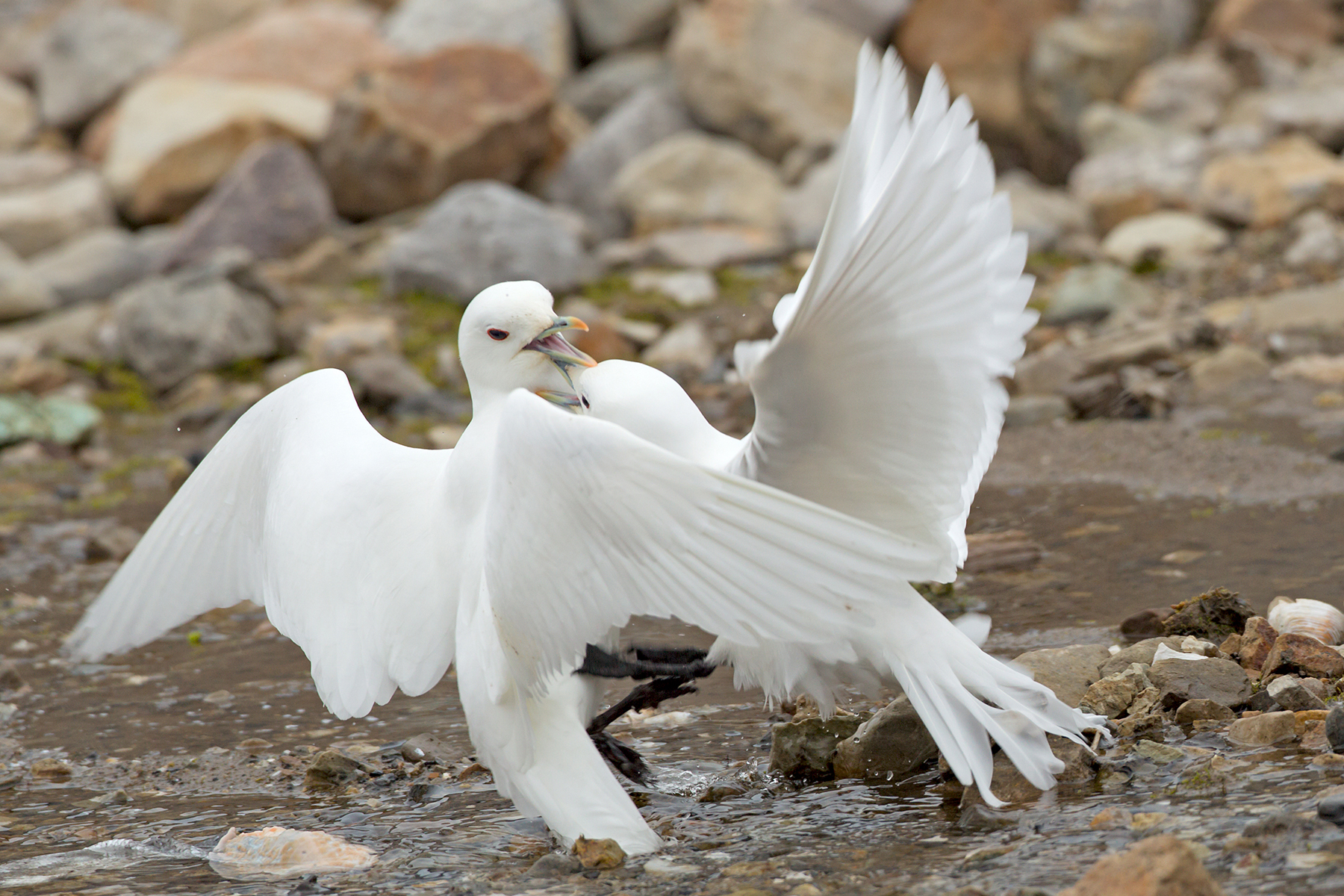
Ivory Gulls fighting (image by Mike Watson)
Purple Sandpiper (image by Mike Watson)
Harbour Seal (image by Mike Watson)
Walruses (image by Mike Watson)
Arctic Fox (image by Mike Watson)
Polar Bear and glacier (image by Mike Watson)
Ice floes in front of a glacier face (image by Mike Watson)
Red Phalarope male (image by Mike Watson)
The Svalbard-endemic pygmy subspecies of Reindeer (image by Mike Watson)
Polar Campion (image by Mike Watson)
Walruses (image by Mike Watson)


Little Auk (image by Mike Watson)
Atlantic Puffin (image by Mike Watson)
Ivory Gull (image by Mike Watson)
Little Auk (image by Mike Watson)
Red Phalarope male (image by Mike Watson)
Rock Ptarmigan (image by Mike Watson)
Walrus (image by Mike Watson)
Northern Fulmar (image by Mike Watson)
Red Phalarope female (image by Mike Watson)
Polar Stoloniferous Saxifrage (image by Mike Watson)
Northern Fulmar (image by Mike Watson)
Common Ringed Plover (image by Mike Watson)
Ivory Gull (image by Mike Watson)
Polar Cress (image by Mike Watson)
Bearded Seal (image by Mike Watson)
Purple Sandpiper (image by Mike Watson)
Rock Ptarmigan (image by Mike Watson)
Little Auk (image by Mike Watson)
Polar Bear (image by Mike Watson)
Arctic Fox (image by Mike Watson)
Parasitic Jaeger or Arctic Skua (image by Mike Watson)
Purple Sandpiper (image by Mike Watson)
Snow Bunting (image by Mike Watson)
The pygmy Svalbard form of Reindeer (image by Mike Watson)
Arctic Fox (image by Mike Watson)
Svalbard (image by Mike Watson)
Ivory Gull (image by Mike Watson)
Sabines Gull (image by Mike Watson)
Walrus (image by Mike Watson)
Ivory Gull (image by Mike Watson)
Bearded Seal (image by Mike Watson)
Red Phalarope female (image by Mike Watson)
Rock Ptarmigan (image by Mike Watson)
Parasitic Jaeger (or Arctic Skua) (image by Mike Watson)
Thick-billed Murre or Brünnich's Guillemot (image by Mike Watson)
Whiplash Saxifrage (image by Mike Watson)
Great Skuas (image by Mike Watson)
Parasitic Jaeger or Arctic Skua (image by Mike Watson)
Ivory Gull (image by Mike Watson)
Little Auks (image by Mike Watson)
Ivory Gulls fighting (image by Mike Watson)
Purple Sandpiper (image by Mike Watson)
Harbour Seal (image by Mike Watson)
Walruses (image by Mike Watson)
Arctic Fox (image by Mike Watson)
Polar Bear and glacier (image by Mike Watson)
Ice floes in front of a glacier face (image by Mike Watson)
Red Phalarope male (image by Mike Watson)
The Svalbard-endemic pygmy subspecies of Reindeer (image by Mike Watson)
Polar Campion (image by Mike Watson)
Walruses (image by Mike Watson)


|
Thursday 10th June – Sunday 13th June 2027 Leaders: Mike Watson and an assistant |
4 Days | Group Size Limit 10 |
Birdquest’s Svalbard: Ivory Gull Special birding tours are surely our most unusual European birding and wildlife journey. This short Svalbard tour is an enjoyable adventure in this remote Arctic wilderness area and features the sought-after Ivory Gull, breeding Little Auks (or Dovekies), Thick-billed Murre (or Brünnich’s Guillemot), Red Phalarope, Barnacle and Pink-footed Geese, King Eider, Rock Ptarmigan, Arctic Fox, Walrus, ‘pygmy’ Reindeer and much more.
The remote archipelago of Svalbard (also referred to as ‘Spitsbergen’, after the largest island in the group), Europe’s only large High Arctic territory, extends from over 76°N to nearly 81°N latitude, its northernmost point being only about 1000 kilometres (about 600 miles) from the North Pole! Situated at the same extremely high latitudes as northern Greenland, unlike in that area, the warming effects of the Gulf Stream extend even this far north and melt the sea ice to such an extent in summer that the archipelago has a small permanent human population and can be reached by sea and air.
Spitsbergen may have been discovered by the Vikings, but there is insufficient evidence, and so its formal discoverer is William Barents, who reached the west coast in 1596 while trying to find a Northeast Passage to China and the Pacific. Barents failed in the attempt, being turned back by the ice yet again, but the news of huge numbers of whales and Walruses resulted in further exploration and then, in the early 17th century, the establishment of commercial whaling bases by the English, Dutch, Basques and others. In the 18th and early 19th centuries, hunting of Arctic Foxes, Polar Bears and Reindeer for pelts became important. Eventually, coal mining was established by a variety of nations at the beginning of the 20th century, although only a limited amount of mining continues to this day. In 1925, an international treaty granted Norway sovereignty over Svalbard (which means ‘northern frontier’), although the treaty powers, which include Russia, Germany and Britain, retain equal economic rights.
In the 19th and early 20th centuries, Svalbard became the focus of polar exploration and science. Starting with the expeditions of Scoresby, Franklin and Sabine between 1806 and 1823, numerous expeditions either explored the Svalbard archipelago itself or used the islands as a forward base for attempts on the North Pole. Nansen’s famous ice-strengthened ship Fram emerged from the ice near Svalbard after being trapped for nearly three years and drifting to within a few hundred kilometres of the pole, while the doomed balloon expedition of Andrée left from the northwestern tip of the archipelago, as did Wellman’s unsuccessful attempts by airship, and Amundsen’s by seaplane. Finally, in 1926, Byrd (who was later also to be the first to fly to the South Pole) flew from Ny Ålesund on Spitsbergen to the North Pole and back.
Today, Svalbard is an environmental showcase, having the highest proportion of national parks and nature reserves of any equivalent landmass on earth (the great majority of the archipelago is now protected), and it is the absolutely stunning Arctic scenery and rich Arctic wildlife and plant life that draw visitors intent on a more peaceful appreciation of the islands. Here are dramatic pointed mountains draped in snow (the same mountains that gave Spitsbergen its name), enormous interior ice caps, vast glaciers that carve their way down to spectacular fjords, immense areas of sea ice (especially in winter) and impossibly blue chunks of glacier ice carved into weird shapes by the action of wind and sea.
During our visit to Svalbard, we will be based in the town of Longyearbyen, the tiny ‘capital’ of the territory. Here we will be living at over 78°N latitude!
Svalbard posesses a limited but rich array of birdlife, including such seabirds as Thick-billed Murre (or Brünnich’s Guillemot), Black Guillemot, Atlantic Puffin and the delightful Little Auk, beautiful Arctic shorebirds (including the stunning Red Phalarope and Purple Sandpiper), the ice-loving Ivory Gull, Glaucous Gull, Parasitic Jaeger (or Arctic Skua), nesting Barnacle and Pink-footed Geese, King Eider and Rock Ptarmigan.
We should also enjoy some wonderful views of Walrus (at Borebukta), as well as Arctic Fox, Bearded Seal and ‘Pygmy’ Rheindeer! There is only a slim chance of seeing a Polar Bear.
There are also a host of beautiful Arctic wildflowers, including Svalbard Poppy, Polar and Moss Campions, Mountain Avens, saxifrages and arctic buttercups.
Birdquest has operated Svalbard (Spitsbergen) birding tours since 2004.
Accommodation & Transport
The hotel in Longyearbyen is comfortable and of good quality. Roads are limited and unpaved away from the town.
Walking
The walking during our Svalbard: Ivory Gull Special birding tours is mostly easy. Walks will be for relatively short distances, although there will be uphill, boggy or stony areas at times, which will make some walks of a more moderate grade.
Climate
Surprisingly mild for so far north, due to the warming effects of the Gulf Stream. Temperatures average around 3-8°C, although it can feel warmer on still, sunny days ashore and correspondingly colder on overcast, breezy days, especially near or over water. There is usually little rainfall, and sunny periods are interspersed with overcast weather. Some fog is possible.
Bird Photography
Opportunities during our Svalbard: Ivory Gull Special birding tours are fairly good.
To see a larger map, click on the square-like ‘enlarge’ icon in the upper right of the map box.
To see (or hide) the ‘map legend’, click on the icon with an arrow in the upper left of the map box.
To change to a satellite view, which is great for seeing the physical terrain (and for seeing really fine details by repetitive use of the + button), click on the square ‘map view’ icon in the lower left corner of the ‘map legend’.
Birdquest Inclusions: Our tour prices include transportation, accommodations and meals.
We also include all tipping for accommodation/restaurant staff and boat staff.
Deposit: 20% of the total tour price. Our office will let you know what deposit amount is due, in order to confirm your booking, following receipt of your online booking form.
TO BOOK THIS TOUR: Click here (you will need the tour dates)
Note: While twin-bedded rooms are available, double beds are not available at our hotel.
The single supplement will not apply if you indicate on booking that you prefer to share a room and there is a room-mate of the same sex available.
This tour is priced in Euros. Amounts shown in other currencies are indicative.
Svalbard: Ivory Gull Special: Day 1
If the weather is good, the flight to Longyearbyen will be a spectacular introduction. First one crosses the mountains, lakes and fjords of Norway and then the even more impressive mountains of Spitsbergen, which stretch far away into the distance. This will be just a foretaste of the magic to come.
Our Svalbard: Ivory Gull Special birding tour begins at Longyearbyen airport at around midday.
(Most flights into Longyearbyen originate from Oslo. The tour start is designed to coincide with the arrival of morning flights from that city.)
We will spend the next four nights in Longyearbyen. This afternoon, we will start our exploration of the surrounding area.
Svalbard: Ivory Gull Special: Days 2-3
Longyearbyen is the only place on the island of Spitsbergen or in the whole of Svalbard that qualifies for the term ‘town’, although it is very small. Originally established to serve the Norwegian coal mines, which still exist but are now unused, the town now serves as the administrative centre for the islands and has a growing tourist business, as well as a university. The gaily painted wooden houses and the small but modern shopping centre look strangely out of place amidst the looming, snow-covered fells and the waters of the Isfjord.
At the edge of town, everyone likes to admire one of the world’s most unusual and charismatic road signs – a red triangular warning sign with a Polar Bear silhouette and the wording ‘applies to all Svalbard’. Although Polar Bears are usually wary of humans, and they are very rare wanderers around Longyearbyen at this time of year, there have been exceptions over the years. In consequence, hikers and kayakers are expected to carry a flare gun and/or a rifle to deter a bear if it ever proves necessary.
We should see your first Snow Buntings in the town itself, and we can also expect to come across cooing Common Eiders, Long-tailed Ducks in their beautiful summer plumage, Common Ringed Plover, Dunlin and some very tame Purple Sandpipers, while Arctic Terns will be constant companions. Glaucous Gulls are the common large gulls here, but occasionally they are joined by a vagrant Iceland Gull or one of Spitsbergen’s few resident Great Black-backed Gulls.
At this time of year, the much-wanted Ivory Gull is regular around Longyearbyen. We would like to say that seeing one is pretty certain, but to be realistic, the chances of a sighting (which could be very close) are better than 80%. Svalbard is surely the most reliable place to see this unusual bird, which is very hard to get to grips with in other accessible areas in its range.
Common Eiders are numerous in the area, and we should be able to locate some King Eiders, admiring the very smart males in breeding plumage.
Out in the tundra, Red-throated Loons (or Red-throated Divers) and lovely Red (or Grey) Phalaropes haunt the pools. Both Barnacle and Pink-footed Geese breed in the area, and Parasitic Jaegers (or Arctic Skuas) are quite common. If we are lucky, we will come across a Pomarine Jaeger (or Pomarine Skua) on migration. Rock Ptarmigans prefer the rocky slopes, even occurring in Longyearbyen itself.
Arctic Foxes are regularly encountered and are rather fearless. They will be in their brown and cream summer pelage at this time of year. The curious ‘pygmy’ Svalbard form of the Reindeer, which has short legs that make it appear almost wild goat-like, as well as a rather goggle-eyed look, can also be found in the area. It has adapted to Svalbard’s very harsh winter climate and sparse food resources.
Arctic plants are numerous and diverse, including various saxifrages, arctic buttercups, Mountain Avens, White Arctic Bell Heather and Moss and Polar Campions, amongst others. Spitsbergen’s only widespread ‘tree’, the mat-like Polar Willow, is everywhere.
Around Longyearbyen and indeed around much of Spitsbergen, the many boulder slopes provide countless crevices for nesting Little Auks (or Dovekies). We will be able to work our way cautiously to the edge of a colony. At this time of year, it is still early in the breeding cycle, and the birds are visiting their burrows to lay eggs and gathering to socialise. As we gaze across the slope, we will be able to see lots of little white and black birds clustered on the boulders and by carefully creeping up on these splendid little alcids, we should be able to get stunning views from very close range. Flocks of birds are constantly coming and going at the colony, and just hearing the maniacal cackling of the birds is something special in itself. Every so often, a Glaucous Gull (or more rarely a Great Skua) patrols the slopes, creating a frenzy of activity as the birds take to the air, the flocks curving across the sky before gradually settling again. Indeed, the whole experience is absolutely marvellous for anyone who loves birds, and is of course unique to the High Arctic. A very different experience all round from seeing a solitary Little Auk in winter bobbing distantly on the water off some headland, or whirring past at extreme range!
During our visit, weather permitting, we will travel by boat across the wide and scenically spectacular Isfjord to Borebukta, a large bay on the northern side. During the crossing, there will be plenty of Little Auks around as well as Thick-billed Murres (or Brünnich’s Guillemot), Atlantic Puffins, dark morph Northern Fulmars and Black-legged Kittiwakes.
At Borebukta, we should get some wonderful views of Walruses, either from a beach where they often haul out or from the boat. Walruses generally feed in shallow water, and we may encounter one or two hauled out on slabs of ice, particularly if there is still too much ice onshore for them to haul out easily on the beach. Seeing a large male Walrus at close range is truly impressive, especially when one can count every bristle on that amazing face! We should also see these bizarre creatures in the water, watching them roll around or rear their heads up to see what is happening, squinting along those huge tusks. Conditions allowing, we should be able to make a landing at a favoured haulouts where these strange creatures look for all the world like a heap of gigantic brown slugs as they sleep away during the ‘heat’ of a summer’s day while wallowing in decomposing kelp! If a new arrival turns up, there may be a brief kafuffle as the newcomer shuffles its way into the midst of the heap, causing some rearing up and tusk stabbing, not to mention some outraged bellowing!
We will also visit the nearby and spectacular Borebreen glacier, which descends for 22 kilometres (17 miles) from the wild interior mountains of northwest Spitsbergen. The white, grey and blue ice formations at the front of the glacier are truly impressive, and at this time of year, an Ivory Gull or a Sabine’s Gull in breeding plumage could turn up. Bearded Seals are regularly seen on the ice floes, and even a Polar Bear sighting is a slim possibility, although nowadays regulations are so strict in Svalbard that approaches by boats within 500 metres are not allowed!
Svalbard: Ivory Gull Special: Day 4
After some final birding in Svalbard, we will head for the airport, where our tour ends around midday.
(The tour end is designed to coincide with the departure of the afternoon flight to Oslo. If you prefer, you could take a morning flight to Oslo. You would miss some birding this morning, but more likely than not, no extra bird species would be missed.)