Email birders@birdquest-tours.com
Telephone 07777 186845
(International +44 7777 186845)
Email birders@birdquest-tours.com
Telephone 07777 186845
(International +44 7777 186845)
Africa and its islands
Malagasy Turtle Dove (image by Mark Beaman)
Mayotte Scops Owls (image by Pete Morris)
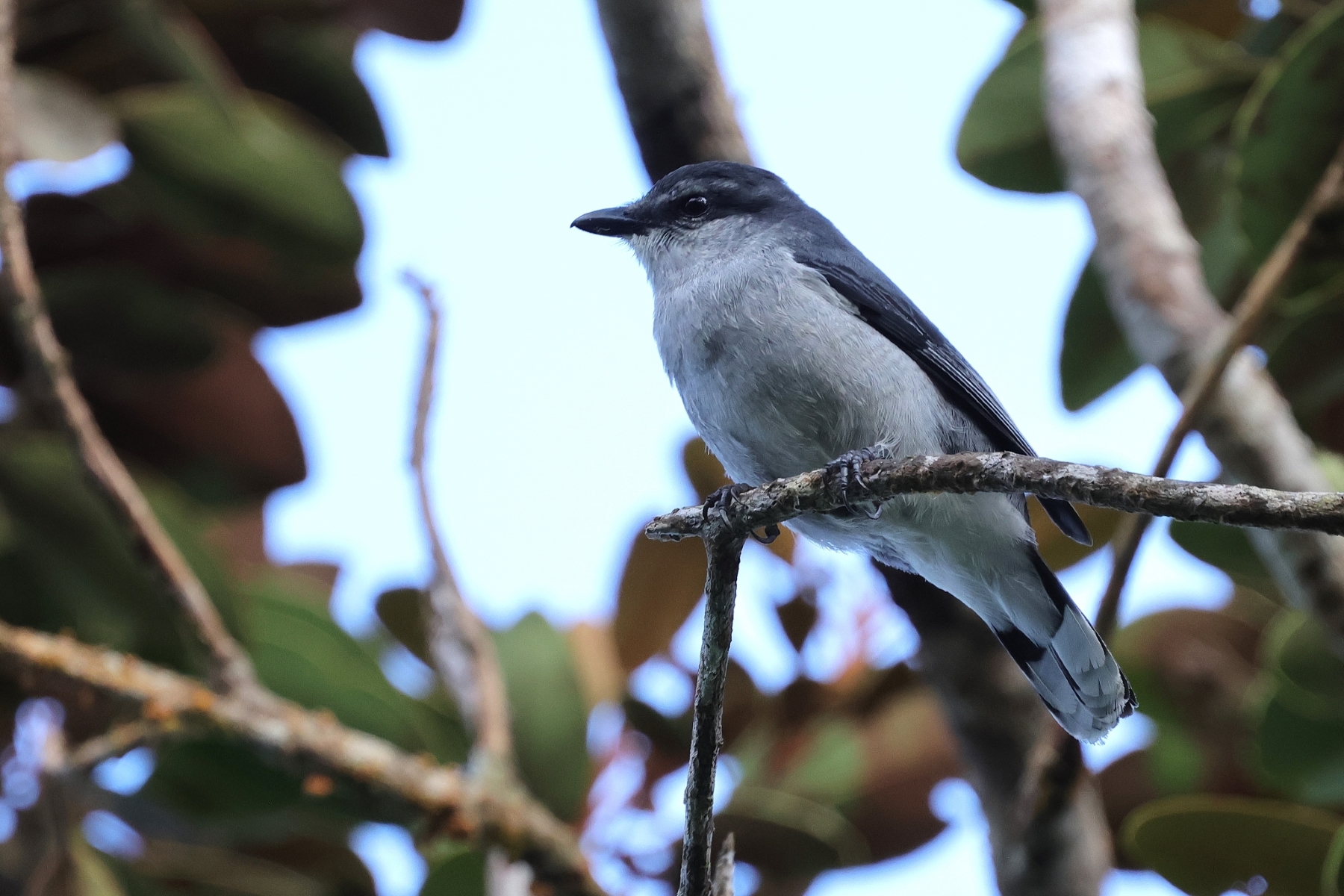
Mauritius Bulbul (image by Mark Beaman)
Comoros Olive Pigeon (image by Pete Morris)
Mascarene Martin (image by Mark Beaman)
Seychelles Flying Fox (image by Mark Van Beirs)
Red-tailed Tropicbirds (image by Mark Beaman)
Anjouan Brush Warbler (image by Pete Morris)
Rodrigues Fody male (image by Mark Beaman)
Anjouan Sunbird (image by Pete Morris)
Native forest on Rodrigues (image by Mark Beaman)
Mauritius Kestrel (image by Mark Beaman)
Rodrigues Warbler (image by Mark Van Beirs)
Rodrigues Fody (image by Hannu Jännes)
Mauritius Kestrel carrying Inca Dove prey (image by Mark Beaman)
Crab-eating or Long-tailed Macaques on Mauritius (image by Mark Beaman)
Seychelles Kestrel (image by Mark Van Beirs)
Seychelles Warbler (image by Mark Van Beirs)
Round Island Petrel light morph (image by Mark Beaman)
Round Island Petrel dark morph (image by Mark Beaman)
Comoros Cuckooshrike (image by Pete Morris)
Comoros Fody (image by Pete Morris)
Moheli Scops Owl (image by Pete Morris)
Mascarene Paradise Flycatcher (image by Mark Van Beirs)
Rodrigues Fody male (image by Mark Beaman)
Comoro Blue Vanga (image by Pete Morris)
Black River Gorges National Park on Mauritius (image by Mark Beaman)
Comoros Thrush (image by Pete Morris)
Piton Maïdo scenery, Réunion (image by Mark Beaman)
pair of Fairy Terns (image by Hannu Jännes)
White Tern (image by Mark Van Beirs)
Mascarene Paradise Flycatcher male in Réunion. The jury is still out as to whether or not it is distinct from the Mauritius form (image by Mark Beaman)
Rodrigues Fody (image by Mark Van Beirs)
Frances's Sparrowhawk (image by Pete Morris)
Aldabra Giant Tortoise, an introduced creature on Mauritius (image by Mark Beaman)
Reunion Grey White-eye (image by Mark Beaman)
Mascarene Paradise Flycatcher female in Réunion (image by Mark Beaman)
Round Island, Mauritius (image by Mark Van Beirs)
Striated Heron (image by Hannu Jännes)
La Digue Coast, Seychelles (image by Mark Van Beirs)
Grand Comoro Drongo (image by Pete Morris)
Reunion Olive White-eye (image by Mark Beaman)
Crab-eating or Long-tailed Macaque on Mauritius (image by Mark Beaman)
Karthala White-eye (image by Pete Morris)
Mascarene Paradise Flycatcher male in Mauritius (image by Mark Beaman)
Rodrigies Fody male (image by Inger Vandyke)
Mauritius Kestrel (image by Mark Van Beirs)
Seychelles Scops Owl (image by tour participant Rainer Kopa)
Mauritius Fody male (image by Mark Beaman)
Reunion Stonechat or Tek-tek (image by Mark Beaman)
Mauritius Grey White-eye (image by Mark Beaman)
Mauritius Cuckooshrike (image by Hannu Jännes)
Seychelles Warbler (image by Hannu Jännes)
Seychelles White-eye (image by Hannu Jännes)
Mahebourg in Mauritius (image by Mark Beaman)
The wave-swept coastline of Réunion (image by Mark Beaman)
Mascarene Martin (image by Mark Beaman)
Wedge-tailed Shearwater (image by Mark Van Beirs)
Seychelles Blue Pigeon (image by Hannu Jännes)
'Madagascar' Cuckoo-roller (image by Pete Morris)
Red Fody (image by Mark Van Beirs)
Mauritius Ornate Day Gecko (image by Mark Beaman)
Grand Comoro Scops Owl (image by Pete Morris)
Echo Parakeet male on Mauritius (image by Mark Beaman)
Grand Comoro Drongo (image by Pete Morris)
Mauritius pelagic (image by Hannu Jännes)
Red-tailed Tropicbird (image by Mark Beaman)
Telfair's Skink in Mauritius (image by Mark Beaman)
Barau's Petrel (image by Pete Morris)
Rodrigues Warbler (image by Hannu Jännes)
Seychelles Fody (image by Mark Van Beirs)
Seychelles Paradise Flycatcher (image by Hannu Jännes)
Native forest in the highlands of Réunion (image by Mark Beaman)
A Mauritius Ornate Day Gecko on the head of a sculpture of the extinct Giant Skink (image by Mark Beaman)
'Grand Comoro' Cuckoo-roller (image by Pete Morris)
Mauritius Cuckooshrike male (image by Mark Beaman)
Mauritius Fody (image by Hannu Jännes)
Common Noddy (image by Mark Van Beirs)
Comoros Thrush (image by Pete Morris)
Echo Parakeet female on Mauritius (image by Mark Beaman)
Mayotte Sunbird (image by Pete Morris)
Tropical Shearwater (image by Mark Van Beirs)
Reunion Stonechat or Tek-tek (image by Mark Beaman)
White-tailed Tropicbird (image by Mark Beaman)
Pink Pigeon (image by Hannu Jännes)
Mayotte White-eye (image by Pete Morris)
Comoros Blue Pigeon (image by Pete Morris)
Reunion Bulbul (image by Mark Beaman)
Pink Pigeon in Mauritius (image by Mark Beaman)
Round Island Petrel light morph (image by Mark Beaman)
Seychelles Black Parrot (image by Hannu Jännes)
Pink Pigeon in Mauritius (image by Mark Beaman)
Mauritius Kestrel (image by Mark Beaman)
Mauritius Olive White-eye (image by Hannu Jännes)
Seychelles Black Parrot (image by Mark Van Beirs)
Lesser Noddies (image by Mark Beaman)
Seychelles Magpie-Robin (image by Mark Van Beirs)
Comoros Olive Pigeon (image by Pete Morris)
Mayotte Drongo (image by Pete Morris)
Lesser Noddy (image by Mark Beaman)
Piton Maïdo scenery, Réunion (image by Mark Beaman)
Le Morne Brabant in Mauritius at sunrise (image by Mark Beaman)
Mauritius Scenery (image by Mark Van Beirs)
A male of the Critically Endangered Reunion Cuckooshrike (image by Mark Beaman)
Grand Comoro Brush Warbler (image by Pete Morris)
Seychelles Sunbird (image by Hannu Jännes)
Red Fody (image by Mark Van Beirs)
Seychelles Blue Pigeon (image by Mark Van Beirs)
Grand Comoro Bulbul (image by Pete Morris)
A young Sooty Tern (image by Mark Van Beirs)
Pink Pigeon (image by Mark Van Beirs)
Mauritius Kestrel (image by Mark Beaman)
Lesser Noddy (image by Hannu Jännes)
Moheli Brush Warbler (image by Pete Morris)
Wright's Skink (image by Mark Van Beirs)
Striated Heron (image by Mark Beaman)
Humblot's Flycatcher (image by Pete Morris)
Mauritius Cuckooshrike female (image by Mark Beaman)
Fairy Tern chick (image by Hannu Jännes)
Mauritius Ornate Day Gecko (image by Mark Beaman)
Mahe (image by Hannu Jännes)
Rodrigues Warbler (image by Mark Beaman)
Piton Maïdo scenery, Réunion (image by Mark Beaman)
Kirk's White-eye (image by Pete Morris)
White-tailed Tropicbird (image by Hannu Jännes)
Lesser Noddy (image by Mark Van Beirs)
Brown Noddy (image by Hannu Jännes)
Baillon's Shearwater off Réunion (image by Mark Beaman)
Red or Madagascar Fody (image by Hannu Jännes)
Round Island, off Mauritius (image by Mark Beaman)
Wedge-tailed Shearwater (image by Mark Beaman)
White-tailed Tropicbird with chick (image by Mark Van Beirs)
Mauritius Olive White-eye (image by Mark Beaman)
Aldabra Giant Tortoise, an introduced creature on Mauritius as the local tortoises were exterpated (image by Mark Beaman)
Introduced Red Fody and House Sparrow, on an 'introduced' Shiva Lingam – such is Mauritius today (image by Mark Beaman)
The volcanic scenery of Réunion (image by Mark Beaman)
Striated Heron (image by Pete Morris)
Comoros Fody (image by Pete Morris)
Reunion Stonechat (image by Pete Morris)
Seychelles Bulbul (image by Mark Van Beirs)
Mayotte Scops Owl (image by Pete Morris)
Grand Comoro Stonechat (image by Pete Morris)
Echo Parakeet (image by Hannu Jännes)
Seychelles Magpie-Robin (image by Hannu Jännes)
Mauritius Kestrels (image by Hannu Jännes)
Mascarene Paradise Flycatcher (image by Hannu Jännes)
Seychelles Bulbul (image by Hannu Jännes)

Malagasy Turtle Dove (image by Mark Beaman)
Mayotte Scops Owls (image by Pete Morris)
Mauritius Bulbul (image by Mark Beaman)
Comoros Olive Pigeon (image by Pete Morris)
Mascarene Martin (image by Mark Beaman)
Seychelles Flying Fox (image by Mark Van Beirs)
Red-tailed Tropicbirds (image by Mark Beaman)
Anjouan Brush Warbler (image by Pete Morris)
Rodrigues Fody male (image by Mark Beaman)
Anjouan Sunbird (image by Pete Morris)
Native forest on Rodrigues (image by Mark Beaman)
Mauritius Kestrel (image by Mark Beaman)
Rodrigues Warbler (image by Mark Van Beirs)
Rodrigues Fody (image by Hannu Jännes)
Mauritius Kestrel carrying Inca Dove prey (image by Mark Beaman)
Crab-eating or Long-tailed Macaques on Mauritius (image by Mark Beaman)
Seychelles Kestrel (image by Mark Van Beirs)
Seychelles Warbler (image by Mark Van Beirs)
Round Island Petrel light morph (image by Mark Beaman)
Round Island Petrel dark morph (image by Mark Beaman)
Comoros Cuckooshrike (image by Pete Morris)
Comoros Fody (image by Pete Morris)
Moheli Scops Owl (image by Pete Morris)
Mascarene Paradise Flycatcher (image by Mark Van Beirs)
Rodrigues Fody male (image by Mark Beaman)
Comoro Blue Vanga (image by Pete Morris)
Black River Gorges National Park on Mauritius (image by Mark Beaman)
Comoros Thrush (image by Pete Morris)
Piton Maïdo scenery, Réunion (image by Mark Beaman)
pair of Fairy Terns (image by Hannu Jännes)
White Tern (image by Mark Van Beirs)
Mascarene Paradise Flycatcher male in Réunion. The jury is still out as to whether or not it is distinct from the Mauritius form (image by Mark Beaman)
Rodrigues Fody (image by Mark Van Beirs)
Frances's Sparrowhawk (image by Pete Morris)
Aldabra Giant Tortoise, an introduced creature on Mauritius (image by Mark Beaman)
Reunion Grey White-eye (image by Mark Beaman)
Mascarene Paradise Flycatcher female in Réunion (image by Mark Beaman)
Round Island, Mauritius (image by Mark Van Beirs)
Striated Heron (image by Hannu Jännes)
La Digue Coast, Seychelles (image by Mark Van Beirs)
Grand Comoro Drongo (image by Pete Morris)
Reunion Olive White-eye (image by Mark Beaman)
Crab-eating or Long-tailed Macaque on Mauritius (image by Mark Beaman)
Karthala White-eye (image by Pete Morris)
Mascarene Paradise Flycatcher male in Mauritius (image by Mark Beaman)
Rodrigies Fody male (image by Inger Vandyke)
Mauritius Kestrel (image by Mark Van Beirs)
Seychelles Scops Owl (image by tour participant Rainer Kopa)
Mauritius Fody male (image by Mark Beaman)
Reunion Stonechat or Tek-tek (image by Mark Beaman)
Mauritius Grey White-eye (image by Mark Beaman)
Mauritius Cuckooshrike (image by Hannu Jännes)
Seychelles Warbler (image by Hannu Jännes)
Seychelles White-eye (image by Hannu Jännes)
Mahebourg in Mauritius (image by Mark Beaman)
The wave-swept coastline of Réunion (image by Mark Beaman)
Mascarene Martin (image by Mark Beaman)
Wedge-tailed Shearwater (image by Mark Van Beirs)
Seychelles Blue Pigeon (image by Hannu Jännes)
'Madagascar' Cuckoo-roller (image by Pete Morris)
Red Fody (image by Mark Van Beirs)
Mauritius Ornate Day Gecko (image by Mark Beaman)
Grand Comoro Scops Owl (image by Pete Morris)
Echo Parakeet male on Mauritius (image by Mark Beaman)
Grand Comoro Drongo (image by Pete Morris)
Mauritius pelagic (image by Hannu Jännes)
Red-tailed Tropicbird (image by Mark Beaman)
Telfair's Skink in Mauritius (image by Mark Beaman)
Barau's Petrel (image by Pete Morris)
Rodrigues Warbler (image by Hannu Jännes)
Seychelles Fody (image by Mark Van Beirs)
Seychelles Paradise Flycatcher (image by Hannu Jännes)
Native forest in the highlands of Réunion (image by Mark Beaman)
A Mauritius Ornate Day Gecko on the head of a sculpture of the extinct Giant Skink (image by Mark Beaman)
'Grand Comoro' Cuckoo-roller (image by Pete Morris)
Mauritius Cuckooshrike male (image by Mark Beaman)
Mauritius Fody (image by Hannu Jännes)
Common Noddy (image by Mark Van Beirs)
Comoros Thrush (image by Pete Morris)
Echo Parakeet female on Mauritius (image by Mark Beaman)
Mayotte Sunbird (image by Pete Morris)
Tropical Shearwater (image by Mark Van Beirs)
Reunion Stonechat or Tek-tek (image by Mark Beaman)
White-tailed Tropicbird (image by Mark Beaman)
Pink Pigeon (image by Hannu Jännes)
Mayotte White-eye (image by Pete Morris)
Comoros Blue Pigeon (image by Pete Morris)
Reunion Bulbul (image by Mark Beaman)
Pink Pigeon in Mauritius (image by Mark Beaman)
Round Island Petrel light morph (image by Mark Beaman)
Seychelles Black Parrot (image by Hannu Jännes)
Pink Pigeon in Mauritius (image by Mark Beaman)
Mauritius Kestrel (image by Mark Beaman)
Mauritius Olive White-eye (image by Hannu Jännes)
Seychelles Black Parrot (image by Mark Van Beirs)
Lesser Noddies (image by Mark Beaman)
Seychelles Magpie-Robin (image by Mark Van Beirs)
Comoros Olive Pigeon (image by Pete Morris)
Mayotte Drongo (image by Pete Morris)
Lesser Noddy (image by Mark Beaman)
Piton Maïdo scenery, Réunion (image by Mark Beaman)
Le Morne Brabant in Mauritius at sunrise (image by Mark Beaman)
Mauritius Scenery (image by Mark Van Beirs)
A male of the Critically Endangered Reunion Cuckooshrike (image by Mark Beaman)
Grand Comoro Brush Warbler (image by Pete Morris)
Seychelles Sunbird (image by Hannu Jännes)
Red Fody (image by Mark Van Beirs)
Seychelles Blue Pigeon (image by Mark Van Beirs)
Grand Comoro Bulbul (image by Pete Morris)
A young Sooty Tern (image by Mark Van Beirs)
Pink Pigeon (image by Mark Van Beirs)
Mauritius Kestrel (image by Mark Beaman)
Lesser Noddy (image by Hannu Jännes)
Moheli Brush Warbler (image by Pete Morris)
Wright's Skink (image by Mark Van Beirs)
Striated Heron (image by Mark Beaman)
Humblot's Flycatcher (image by Pete Morris)
Mauritius Cuckooshrike female (image by Mark Beaman)
Fairy Tern chick (image by Hannu Jännes)
Mauritius Ornate Day Gecko (image by Mark Beaman)
Mahe (image by Hannu Jännes)
Rodrigues Warbler (image by Mark Beaman)
Piton Maïdo scenery, Réunion (image by Mark Beaman)
Kirk's White-eye (image by Pete Morris)
White-tailed Tropicbird (image by Hannu Jännes)
Lesser Noddy (image by Mark Van Beirs)
Brown Noddy (image by Hannu Jännes)
Baillon's Shearwater off Réunion (image by Mark Beaman)
Red or Madagascar Fody (image by Hannu Jännes)
Round Island, off Mauritius (image by Mark Beaman)
Wedge-tailed Shearwater (image by Mark Beaman)
White-tailed Tropicbird with chick (image by Mark Van Beirs)
Mauritius Olive White-eye (image by Mark Beaman)
Aldabra Giant Tortoise, an introduced creature on Mauritius as the local tortoises were exterpated (image by Mark Beaman)
Introduced Red Fody and House Sparrow, on an 'introduced' Shiva Lingam – such is Mauritius today (image by Mark Beaman)
The volcanic scenery of Réunion (image by Mark Beaman)
Striated Heron (image by Pete Morris)
Comoros Fody (image by Pete Morris)
Reunion Stonechat (image by Pete Morris)
Seychelles Bulbul (image by Mark Van Beirs)
Mayotte Scops Owl (image by Pete Morris)
Grand Comoro Stonechat (image by Pete Morris)
Echo Parakeet (image by Hannu Jännes)
Seychelles Magpie-Robin (image by Hannu Jännes)
Mauritius Kestrels (image by Hannu Jännes)
Mascarene Paradise Flycatcher (image by Hannu Jännes)
Seychelles Bulbul (image by Hannu Jännes)


|
Tuesday 26th October – Wednesday 17th November 2027 Leader: Mark Van Beirs |
23 Days | Group Size Limit 8 (tour guaranteed) |
Birdquest’s Comoros, Réunion, Mauritius & Seychelles birding tours explore a series of far-flung Indian Ocean Islands which offer a truly awesome array of endemic birds! Our combined Comoros, Réunion, Mauritius & Seychelles birding tour provides comprehensive coverage of the Mascarene Islands’ numerous endemic and other speciality birds and also features fantastic seabirds and some very beautiful island scenery.
The Comoro Islands are an archipelago of volcanic islands lying between Madagascar and Africa. Known by early seafaring Arabs as ‘The Islands of the Moon’, the Comoro Islands are currently politically divided into two entities, the Union of Comoros (a sovereign state comprising Grande Comore, Anjouan and Mohéli) and Mayotte (an ‘overseas collectivity’ of France).
Originally colonised by people of Malay-Polynesian origin, the islands were later colonised by waves of African, Arab and Shirazi (Persian) colonisers. Each of the islands has a very different character, and there is a wonderful expression in the Comoros which says: “Mohéli sleeps, Anjouan works, Mayotte plays and Grande Comore complains!”
The Comoro Islands have been very much neglected by the ornithological world, and very few birders have visited these islands in recent times, in spite of the fact that there are already at least 27 endemic bird species (and perhaps well over 30 in the future after further research). The islands underwent a period of political turmoil in the 1990s, but have since recovered and are now politically stable. This exciting tour is certainly one that should appeal to those with the spirit of adventure and a desire to see some of the planet’s least-known birds.
During our visit to the Comoro Islands, we will visit all four of the major islands, and we have an excellent chance of finding just about all their endemic birds, which include several globally threatened species.
The likely endemics include Comoros Olive, Comoros Green and Comoros Blue Pigeons, Mayotte, Anjouan, Moheli and Karthala Scops Owls, Comoros Black Parrot, Grand Comoro and Moheli Bulbuls, Mayotte, Crested and Grand Comoro Drongos, Comoros Thrush, Humblot’s Flycatcher (a bird in its own genus), Comoros Blue Vanga, Anjouan, Moheli and Grand Comoro Brush Warblers, Mayotte, Kirk’s and Karthala White-eyes, Mayotte, Anjouan and Humblot’s Sunbirds, and Comoros Fody.
With good to excellent accommodations, some superb food and mostly easy birding, most of the remainder of our Mascarene Islands tour counts as a real ‘holiday’, at least by bird tour standards! We will not only have enough time to look for all 30 of the endemic landbirds and the seabirds of the islands we visit, but we will also have a bit of time left over to swim, snorkel or soak up the atmosphere of these pearls of the Indian Ocean. The tour will visit no fewer than 8 of these delightful isles, each one with its own character and each one completely different from the others. This ’earthly paradise’ is a notoriously expensive part of the world for a holiday, but most visitors consider it worth every penny.
We begin the next leg of our tour on the island of Réunion, which lacks sandy beaches but makes up for this with the grandeur of the scenery. Dramatic volcanic mountains with forest-clad slopes rise steeply from the surrounding waters, whilst inland are vast craters that tell the story of the island’s turbulent geological past more eloquently than any words. Endemic Barau’s and Mascarene (or Reunion Black) Petrels breed among the cloud-wreathed peaks, and endemic landbirds include Reunion Harrier, Reunion Cuckooshrike, Réunion Bulbul, Reunion Stonechat, Reunion Grey White-eye and Reunion Olive White-eye.
Moving on to Mauritius, a verdant volcanic island which is home to some more of the world’s rarest birds, we will explore the remaining areas of tropical forest in search of the endemics: Mauritius Kestrel, Pink Pigeon, Echo (or Mauritius) Parakeet, Mauritius Cuckooshrike, Mauritius Bulbul, Mascarene Paradise Flycatcher, Mauritius Grey White-eye, Mauritius Olive White-eye and Mauritius Fody. We will also make a boat trip to uninhabited Round Island, where breeding Red-tailed and White-tailed Tropicbirds circle and ‘Round Island Petrels’ (formerly considered to be Trindade (or Trinidade) Petrels, but now known to be a hybrid population between at least three Pterodroma species and perhaps best treated as an endemic species) swoop over the island in dashing aerial displays.
The remote island of Rodrigues is rarely visited by birdwatchers, despite having two endemic landbirds (Rodrigues Warbler and Rodrigues Fody), so our visit here is something out of the ordinary.
At one time or another, most of us experience the desire to get away from the stresses of modern life and escape to some idyllic tropical island where white sandy beaches are fringed by coconut palms, their fronds swaying gently in the breeze, where warm blue waters lap softly on the shoreline, and nearby coral reefs teem with brilliantly coloured fish. To complete the scene (for the birdwatcher at least), there should be tropicbirds floating overhead and Blue-billed White Terns, surely the most delicately beautiful of all the seabirds, tame enough to nest on a branch not far above one’s head! This picture of paradise is not a fantasy but a reality amongst the string of islands that form the Seychelles.
The wonderful Seychelles are a group of ancient granitic islands with some of the most beautiful scenery in the world. Here we will visit the islands of Mahé, Praslin, Cousin, La Digue and Aride, each with its own special birds. These delightful islands hold some of the world’s rarest birds, including the endemic Seychelles Scops Owl, Seychelles Magpie-Robin, Seychelles Paradise Flycatcher, Seychelles Warbler and Seychelles White-eye, while additional endemics include Seychelles Kestrel, Seychelles Blue Pigeon, Seychelles Black Parrot, Seychelles Swiftlet, Seychelles Bulbul, Seychelles Sunbird and Seychelles Fody.
As a bonus, we will visit the teeming seabird colonies that provide an unforgettable spectacle. Here we will see thousands of Sooty Terns and Brown and Lesser Noddies at their colonies, piratical frigatebirds hanging in the deep blue sky, impossibly beautiful Blue-billed White Terns that are utterly fearless of man and Wedge-tailed Shearwaters gliding over crystal clear waters.
Birdquest has operated Réunion, Mauritius & Seychelles birding tours since 1987 and Comoros birding tours since 2008.
Accommodation & Road Transport
The hotels in most places we visit in the Comoros are fairly basic, although medium grade on Grande Comore. Road transport is by minibuses (passenger vans), cars or 4×4 vehicles. The roads are variable in quality. For the rest of the tour the hotels are of a good standard almost throughout (simpler for one night on Rodrigues). Road transport is by small coach or minibus/passenger van, and roads are generally good.
Walking
The walking effort during our Comoros, Réunion, Mauritius & Seychelles birding tours is mostly easy, sometimes moderate.
Climate
It will be generally hot and sunny, although overcast weather can occur at times. At higher altitudes, the temperature ranges from cool to warm. There is likely to be some rain, and it will be fairly humid.
Bird Photography
Opportunities during our Comoros, Réunion, Mauritius & Seychelles birding tours are good in some places.
To see a larger map, click on the square-like ‘enlarge’ icon in the upper right of the map box.
To see (or hide) the ‘map legend’, click on the icon with an arrow in the upper left of the map box.
To change to a satellite view, which is great for seeing the physical terrain (and for seeing really fine details by repetitive use of the + button), click on the square ‘map view’ icon in the lower left corner of the ‘map legend’.
Birdquest Inclusions: Our tour prices include transportation, accommodations, meals and entrance fees.
We also include all tipping for local guides, drivers, boatmen and accommodation/restaurant staff.
Important: There are only a few direct flights a week between Mauritius and Mahe in the Seychelles! Sometimes the flights are cancelled or rescheduled to an unsuitable day of the week. It may therefore be necessary to fly between the two islands via Nairobi, Dubai or another distant hub. If this is the case, there will be a supplement on top of the standard tour cost, equivalent to the difference between the airfare and any savings on overnight accommodation (we could well be on a night flight). Kindly note that it will not be possible to cancel your place without incurring cancellation charges should this eventuality occur.
Deposit: 20% of the total tour price. Our office will let you know what deposit amount is due in order to confirm your booking, following receipt of your online booking form.
TO BOOK THIS TOUR: Click here (you will need the tour dates)
The single supplement will not apply if you indicate on booking that you prefer to share a room and there is a room-mate of the same sex available.
This tour is priced in US Dollars. Amounts shown in other currencies are indicative.
Comoros, Réunion, Mauritius & Seychelles: Day 1
The tour begins this afternoon at Moroni, the capital city of the Republic of the Comoros, on the island of Grande Comore, where we will spend three nights.
(There are regular flights into Moroni from Nairobi, Addis Ababa and the French island of Réunion.)
Comoros, Réunion, Mauritius & Seychelles: Days 2-3
Grande Comore (or Grand Comoro), otherwise known as Ngazidja, is the largest and westernmost of the Comoro Islands. During our time on the island, we will explore various areas in the highlands, concentrating on the area around Mount Karthala, which has the largest crater of any of the world’s active volcanoes!
Grand Comoro single-island endemics that we should find during our exploration of the island include the critically endangered Grand Comoro Drongo, Grand Comoro Bulbul, the interesting Humblot’s Flycatcher (the sole representative of the genus Humblotia), Grand Comoro Brush Warbler, Kirk’s White-eye and the iridescent Grand Comoro Green Sunbird (now sometimes split from Malagasy Green Sunbird).
In addition, on the upper slopes of Mount Karthala, we will search for the endemic Karthala (or Grand Comoro) Scops Owl and the endemic Karthala White-eye, both of which we should find.
We will also see a number of endemics shared between islands, including Comoros Olive Pigeon, the attractive Comoros Blue Pigeon, Comoros Black Parrot (of the endemic Grand Comoro form), Comoros Cuckooshrike (also of the endemic Grand Comoro subspecies), Comoros Thrush (a species which surely merits a three-way split as the individual island forms are distinctive), the attractive Humblot’s Sunbird and the Grand Comoro form of the Comoros (or Red-headed) Fody.
In addition, we will look out for the Grand Comoro forms of Frances’s Sparrowhawk, Malagasy Spinetail, Malagasy Paradise Flycatcher and African Stonechat (the very isolated montane form here is a likely future split as Grand Comoro Stonechat). Malagasy Harrier is surprisingly common on the island, and around the coast, we should find the Comoros endemic subspecies of Striated Heron and Malagasy Kingfisher.
The Comoro Islands are also home to a number of introduced species such as Ring-necked (or Cape Turtle) and Tambourine Doves, Grey-headed Lovebird, Bronze Mannikin and House Sparrow.
Comoros, Réunion, Mauritius & Seychelles: Day 4
We will take a flight to the island of Mohéli, where we will stay for two nights. According to the flight timing, there will be birding on Mohéli or Grande Comore.
Comoros, Réunion, Mauritius & Seychelles: Day 5
Mohéli, also known as Mwali, is home to four single-island endemic bird species, as well as three others that are shared only with Grande Comore.
During our visit, we will explore the remnant montane forest of the central spine of the island, where we should find the uncommon endemic Moheli (or Benson’s) Brush Warbler, the endemic Moheli Bulbul and the endemic Comoros Blue Vanga (the sole representative of this family outside of Madagascar). With just a little luck, we will come across the rarely observed Comoros Green Pigeon, which is endemic to the Comoro Islands as a whole. After dark, we will try for the recently described endemic Moheli Scops Owl, which we have an excellent chance of seeing as well as hearing its weird screaming calls.
In addition, we should also find the local forms of Humblot’s Sunbird, Comoros Thrush (the distinctive Mohéli form is probably a good species) and, with luck, the rare Mohéli form of the Comoros Cuckooshrike. Other species we may well encounter include the Mohéli forms of Malagasy Paradise Flycatcher, Malagasy White-eye, Malagasy Green Sunbird and Comoros (or Red-headed) Fody.
Off the coast, we are likely to see Lesser Frigatebirds and attractive Masked Boobies, and we also have a good chance of seeing the endemic temptator form of the Persian (or Arabian) Shearwater.
Comoros, Réunion, Mauritius & Seychelles: Day 6
We will take a flight to the island of Anjouan, where we will stay for two nights. According to the flight timing, there will be birding on Anjouan or Mohéli.
Comoros, Réunion, Mauritius & Seychelles: Day 7
Anjouan, also known as Ndzuwani or Nzwani, is the easternmost of the three islands which make up the Republic of the Comoros and is home to three single-island endemics. Two of these, Anjouan Sunbird and Anjouan Brush Warbler, are easy to find and even occur in the town. Sadly, the natural vegetation on Anjouan has been devastated, and it is difficult to find any decent forest. Much more time will be spent tracking down the endearing Anjouan Scops Owl, which may well prove a little challenging as it seems to require reasonable habitat!
Other species we will be looking for on Anjouan include the scaly Anjouan form of the endemic Comoros Thrush (another likely split), as well as the Comoros form of the Greater Vasa Parrot, a Comoros endemic form of the Cuckoo-roller that is found only on Anjouan and the Anjouan forms of Malagasy Paradise Flycatcher, Malagasy White-eye and Comoros Fody. We will also hope to see the scarcer endemic island taxa, including the Anjouan forms of Crested Drongo and the rare Frances’s Sparrowhawk.
Comoros, Réunion, Mauritius & Seychelles: Day 8
Today we will travel by ferry to Dzaoudzi in the French territory of Mayotte. Dzaoudzi is the capital of the two islands that comprise the territory of Mayotte.
Situated at the northern end of the Mozambique Channel, between Madagascar and Africa, Mayotte (officially known by the title ‘The Departmental Collectivity of Mayotte’) is an Overseas Territory of France consisting of two main islands (Grande-Terre or Mahoré, and Petite-Terre or Pamandzi) and several islets. The territory has been politically separate from the rest of the Comoro Islands since the 1970s.
On arrival, we will travel by ferry across to Grande-Terre and then travel a short distance to our accommodation for a two-night stay.
Along the way, we will stop to see the endemic Mayotte White-eye, which is easy to find, and we will call in at a park where we may well find the endemic Mayotte form of the Comoros (or Red-headed) Fody. Other species we may well encounter include Malagasy Turtle Dove and Cuckoo-roller (the latter, curiously, of the mainland Madagascar form, unlike the situation on Grande Comore and Anjouan). If we have no time today, we will see these birds easily tomorrow.
Comoros, Réunion, Mauritius & Seychelles: Day 9
Our time on Grande-Terre will largely be spent exploring the slopes of Mont Combani (480m or around 1570ft). Here, our time will be devoted to finding the three additional endemics that are restricted to Mayotte, as well as some other more widespread Comoro Islands endemics. We will follow a jeep track up the mountain to search for the endemic Mayotte Drongo and endemic Mayotte Sunbird (both of which should be relatively easy to find), and after dark, we will search for the endemic Mayotte Scops Owl, which is common and easy to see. We should also find two more widespread Comoros endemics: Comoros Olive Pigeon and the gorgeous Comoros Blue Pigeon.
With the current trend in splitting, especially of small island forms, we will be on the lookout for all of the endemic taxa throughout the Comoro Islands, and here on Mayotte, these include the Mayotte forms of Frances’s Sparrowhawk and Malagasy Paradise Flycatcher.
Off the coastline, we may turn up both Sooty and Bridled Terns, and Brown Noddy.
Comoros, Réunion, Mauritius & Seychelles: Day 10
This morning, we will travel back to Petite-Terre, spending some time looking around Pamandzi Lagoon. Elegant White-tailed Tropicbirds breed on the island, and the lagoon often holds the superb Crab-plover (the sole member of its family) as well as a good selection of other species, including Peregrine Falcon, Greater Crested Tern and the Comoros forms of Striated Heron and Malagasy Swift.
Afterwards, we will continue to Dzaoudzi airport and take a flight to the island of Réunion for a three-night stay.
Comoros, Réunion, Mauritius & Seychelles: Days 11-12
The dramatically mountainous, volcanic island of Réunion has the status of a department of France, rather curiously misplaced in the middle of the Indian Ocean. The way of life is very French with pavement cafés and distinctly French cuisine. The red-tiled houses that dot the slopes would not look out of place in Provence, and even some of the scenery could have come straight from the south of France.
The natural forest cover on Réunion is much more extensive than on Mauritius, and it is a delight to walk along the peaceful trails through the luxuriant vegetation rich in tree ferns and epiphytic orchids. Here, we will look for the endemic birds of the island.
The critically endangered Réunion Cuckooshrike or Tuit-Tuit gets its local name from the characteristic calls which draw attention to this otherwise rather secretive bird that creeps about in the moss-encrusted branches. The Réunion Bulbul is very similar to its Mauritius counterpart but is smaller and has a white eye. The delightful Réunion Stonechat or Tek-Tek is common along the more open parts of the trails, usually nesting in the mossy banks or among tree roots, whilst the Réunion Grey White-eye and the distinctive Réunion Olive White-eye flit through the leafy canopy in noisy bands. The Coq de Bois or Mascarene Paradise Flycatcher is much easier to find here than on Mauritius, and the form here is sometimes treated as a full species. In the more open areas, we should encounter the splendid endemic Réunion Harrier.
Later in the day, we shall take a boat trip offshore to look for seabirds. The star attractions are the beautiful breeding-endemic Barau’s Petrel or Taille Vent, as it is called locally, and the restricted-range Baillon’s Shearwater. If we are really in luck, we will see the rare, breeding-endemic Mascarene (or Réunion Black) Petrel as well. Other likely species include Wedge-tailed Shearwater, White-tailed Tropicbird and Lesser and Brown Noddies.
Comoros, Réunion, Mauritius & Seychelles: Day 13
This morning, provided we have already seen all the landbird specialities, we will drive up a winding road with many hairpin bends that will take us from sea level to a spectacular viewpoint on the rim of one of the three huge volcanic cirques that form the heart of the island. The scenery is quite breathtaking, with stupendous views of the highest peaks on Réunion (which reach 3065m or 10,056ft) as well as down into the crater floor over a thousand metres below. Once inhabited by escaped slaves, the tiny settlements we can see far below are still almost totally isolated from the outside world, as no road reaches into the crater. Several of the Réunion endemics can be seen in this area, including the sometimes-tricky harrier.
Afterwards, we will catch a flight to the island of Mauritius, followed by a flight to the remote island of Rodrigues for an overnight stay.
Comoros, Réunion, Mauritius & Seychelles: Day 14
Rodrigues is a rather barren island surrounded by coral reefs and has several tiny outlying islets, which provide a haven for breeding seabirds. The island has suffered at the hands of man as well as from cyclones, and much of the island’s natural vegetation has been destroyed. The lowlands, like those on Mauritius, are heavily cultivated, but the slopes above are dotted with pandanus palms and scrub with only a few remnant native trees.
In some of the higher valleys, tiny patches of native forest occur, albeit mixed with mangoes and other exotics. Here, the two endemic landbirds, Rodrigues Fody and Rodrigues Warbler, cling to a precarious existence. Thankfully, both their numbers have increased in recent times. Few birdwatchers have ever seen these rare species, both of which have small populations.
We should also see the endangered Rodrigues Flying Fox, which was the subject of successful captive breeding programmes in Mauritius and Jersey.
Afterwards, we will return by air to Mauritius for a three-night stay.
This afternoon, we will commence our exploration of Mauritius. As we travel around this heavily populated island, we shall pass numerous fields of sugar cane dotted with strange black pyramids of volcanic rocks that have been painstakingly cleared from the soil over the centuries. The journey provides us with our first real chance to take a look at the colourful Mauritians, an attractive blend of Asian, African and European peoples with a similarly mixed culture.
Comoros, Réunion, Mauritius & Seychelles: Days 15-16
The forests on Mauritius are now mostly confined to the mountains of the southwest of the island, where the scenery is spectacular. The volcanic ridges and peaks are dissected by deep valleys cloaked in lush forest, where White-tailed Tropicbirds float over the green canopy, and the white plumes of waterfalls cascade over cliffs to the valley floor far below.
Since the island was discovered by man in 1598, the natural vegetation has suffered greatly, with the result that many of the native island birds have dwindled almost to the point of extinction through a combination of habitat destruction and some unfortunate introductions of both birds and mammals. Some species became extinct, notably the Dodo, which has since become a symbol of man’s failure to live in harmony with nature.
Nowadays, the surviving but endangered birds of Mauritius are subject to intense conservation efforts in a successful effort to save the species concerned.
Amongst the birds we will be searching for are the lovely Pink Pigeon, the beautiful Echo (or Mauritius) Parakeet and the extraordinary, short-winged Mauritius Kestrel. We should see all three fairly easily, in spite of the fact that they are some of the world’s rarest birds.
The Echo Parakeet is now the rarest of these three species. Ousted from many areas by the very similar introduced Ring-necked Parakeet, it was for many years thought to be only a subspecies of the latter and its plight consequently ignored.
The Mauritius Kestrel made a remarkable comeback, having also reached the brink of extinction, but is now, once more, in decline. This remarkable falcon is a forest dweller and has evolved short wings and a long, manoeuvrable tail more typical of an accipiter than a falcon to cope with its woodland environment. Its main prey is the tiny green gecko that lives on the leaves of the Traveller’s Palm and some other trees.
As we explore the remaining forest, Mascarene Swiftlets flutter over the canopy and Mauritius Grey White-eyes flit from tree to tree, but we will have to work quite hard to get to grips with Mauritius Cuckooshrike, Mauritius Bulbul, Mascarene Paradise Flycatcher (the local form is sometimes treated as a single-island endemic), Mauritius Olive White-eye and Mauritius Fody as all five are still declining. The white-eye, in particular, has suffered more than any other passerine from predation by introduced rats, cats and monkeys, so we may need to spend some time in order to find this rare endemic.
We will also have time to look at the birds of the cultivated lowlands, the majority of which are introduced species, such as Striated (or Green-backed) Heron, Malagasy Turtle Dove, Zebra and Spotted Doves, Mascarene Martin, Red-whiskered Bulbul, Village Weaver, Red Fody, Yellow-fronted Canary, Common Waxbill, Common Myna and House Crow.
Sandy beaches and mudflats are attractive to migrant shorebirds such as Greater Sand Plover, Grey (or Black-bellied) Plover, Curlew Sandpiper, Eurasian Whimbrel and Ruddy Turnstone.
On our second full day, after spending the morning exploring the native forests, we will drive to the northwestern corner of the island and embark on a boat trip to Round Island and Serpent Island. These two small uninhabited islands lie to the north of Mauritius.
Once we have passed through the reef, we will see the first Sooty Terns and Brown Noddies. Wedge-tailed Shearwaters pass alongside and, if we are lucky, dolphins will play in the bow wave whilst glittering silver flying fish explode from the sea and glide over the crests of the waves. As we approach Serpent Island, we will see clouds of terns rising above the barren rocky slopes. Here, Lesser Noddies nest alongside Sooty Terns and Brown Noddies. White-tailed and Red-tailed Tropicbirds hang in the updraughts above the sheer cliffs, and a colony of Masked Boobies huddle together on the windward side of the island.
Round Island has seen successful efforts by conservationists to exterminate the island’s feral rabbit population, in an attempt to save both the native vegetation and allow smaller seabirds to breed more successfully. The island is home to several species of endemic reptiles, including skinks, geckos and a sand boa, as well as two endemic palms.
Here we should see the two (or possibly more) morphs of the ‘Round Island Petrel’ indulging in their high-speed aerial chases, which are a delight to watch. The Pterodroma population here were formerly considered to be Herald Petrels, then later considered Trindade (or Trinidade) Petrels. However, more recently, genetic research has shown them to be a hybrid population involving at least three Pterodroma species: Trindade Petrel, which nests in the South Atlantic and Kermadec Petrel, P. neglecta and Herald Petrel, P. heraldica, which nest in the South Pacific! Scientists have already proposed treating this interesting population as an endemic species.
Comoros, Réunion, Mauritius & Seychelles: Day 17
There will probably be some final birding on Mauritius before we leave today.
Depending on available flights at the time of the tour, we will take either an afternoon or evening direct flight to Mahé Island in the Seychelles, and spend two nights there, or set out on a longer journey via Nairobi, Addis Ababa or even Dubai and likely spend tonight on a plane, reducing the stay on Mahé to one night.
Comoros, Réunion, Mauritius & Seychelles: Day 18
Depending on the flight routing we must take between Mauritius and Mahé, we will either have the whole day on Mahé or at least the afternoon and evening.
The island of Mahé is the largest of the Seychelles group and boasts the world’s smallest capital city, Victoria. The friendly Creole population have a carefree manner characteristic of these gentle islands. This happy-go-lucky attitude is infectious, and visitors soon become accustomed to the rhythm of island life. The Creole influence on local food has produced a wonderfully varied and exciting cuisine, much of it based on fresh seafood.
Mahé has beautiful beaches, mangrove swamps and extensive areas of mountain forest on the central ridge, which rises to around 500m. Some of the peaks are covered in cloudforest, which harbours endemic tree frogs and chameleons.
The main avian prizes of Mahé are the endangered endemic Seychelles Scops Owl, which currently appears to have a stable population of 80-160 pairs, and the endangered endemic Seychelles White-eye. The population of the white-eye on Mahé is thought to be only around 25-50 individuals and may still be decreasing, although fortunately, a population of about 300 birds has now been found on the uninhabited islet of Conception. Both the white-eye and the scops owl can require a bit of effort to locate.
The majority of the other nine bird species endemic to the Seychelles Islands occur on Mahé. As we explore the mountain forests, we will easily find Seychelles Kestrel, Seychelles Blue Pigeon (a spectacular deep blue pigeon with a white head and neck and a brilliant scarlet wattle on its crown), Seychelles Bulbul and Seychelles Sunbird.
Among the introduced species that occur here are Malagasy Turtle Dove, Zebra Dove, Common Myna and Red Fody. Western Cattle Egrets are found commonly in the lowlands and, at the coast, we should see a selection of shorebirds, including Grey (or Black-bellied) Plover, Whimbrel, Common Greenshank, Common Sandpiper and Ruddy Turnstone.
Comoros, Réunion, Mauritius & Seychelles: Days 19
After some more birding on Mahé, we will take a short flight across to the island of Praslin for a four-night stay.
Comoros, Réunion, Mauritius & Seychelles: Days 20-22
Praslin is sparsely populated and is the epitome of a tropical island paradise. During our visit, we shall explore the beautiful Vallée de Mai National Park, where stands of the unique Coco-de-Mer, which produces the strange double coconut that is the largest seed in the plant kingdom, occur alongside other endemic palms. The main birding interest is provided by the very distinctive endemic Seychelles Black Parrot.
While based on Praslin, we will make visits to the nearby islands of Cousin, La Digue and Aride.
It is just a short boat trip to the low-lying, mainly wooded island of Cousin. This tiny uninhabited isle, less than a kilometre across, is a BirdLife International reserve that safeguards one of only four populations of the Seychelles Warbler. Once considered to be critically endangered with a world population of only 30 individuals, the species has now increased to a stable population of around 2500 birds.
We will also be looking for the Seychelles Magpie-Robin, the most endangered of the Seychelles endemics, with a total population of only about 170 individuals. The magpie-robins are currently the subject of a BirdLife International conservation project to try to ensure their future.
The Toq-Toq or Seychelles Fody is quite numerous here and its catholic diet not only includes fruit, seeds and insects but seabirds’ eggs as well! Some of the Malagasy Turtle Doves here may be pure-bred Seychelles race, untainted by hybridisation with the introduced Madagascar race (something which has occurred on most of the other islands).
Seabirds will be a feature of the trip, and we can expect to see White-tailed Tropicbirds, Brown and Lesser Noddies, Bridled Tern and ethereal Blue-billed White Terns. Wedge-tailed Shearwaters nest in cracks in the granite boulders, and although they only fly into the colonies at night, we may be fortunate enough to see a few individuals even in the daytime.
The island is also home to some introduced Aldabra Giant Tortoises, which we should find leisurely chewing on some vegetation, or lumbering slowly through the more open areas of forest.
The small island of La Digue is likewise only a short boat trip from Praslin. This quiet island with its scattered settlement is the home of the most beautiful of the endemic birds of the Seychelles Islands, the Seychelles (or Black) Paradise Flycatcher. The males are a rich, velvety blue-black and have improbably long tail plumes which stream out behind as they flit amongst the shady takamaka trees.
La Digue also has one of the few known Seychelles breeding colonies of Seychelles Swiftlet, and we may be able to climb up to their cave to inspect the diminutive nests that cling to the bare granitic rock. Seychelles Sunbirds are particularly common here, and introduced Common Waxbills are frequently encountered.
We shall visit a small marsh where Yellow Bitterns, a species that probably colonised the Seychelles Islands naturally, can be found, and we may also find the Seychelles race of the Common Moorhen. The coast of La Digue often has a few migrant Crab-Plovers, a remarkable wader which is placed in its own family. We may see these unusual birds sitting on their haunches with their legs folded beneath them.
We will also make a boat trip to the seabird island of Aride, looking out for Wedge-tailed and Tropical Shearwaters during the crossing. The rocky hills of this small island are covered in woodland, which provides nesting sites for a variety of seabirds.
The island is owned by the Royal Society for Nature Conservation and has some of the largest colonies of tropical seabirds in the Indian Ocean. Pride of place must go to the quarter of a million nesting Sooty Terns, closely followed by twenty thousand White-tailed Tropicbirds. The largest colony of Lesser Noddies in the Seychelles Islands is found here, as well as smaller numbers of Bridled Terns, Brown Noddies and delightful Blue-billed White Terns. There is a spectacular roost of both Greater and Lesser Frigatebirds on the island.
We may be fortunate enough to find one or two vagrant seabirds, such as Brown Booby or Red-footed Booby.
The experience of the sight, sound and smell of such vast numbers of seabirds at such close range is quite overwhelming and will provide a host of unforgettable memories.
Comoros, Réunion, Mauritius & Seychelles: Day 23
We will fly back to Mahé late this morning or early this afternoon, before our tour ends at Mahé airport.