Email birders@birdquest-tours.com
Telephone 07777 186845
(International +44 7777 186845)
Email birders@birdquest-tours.com
Telephone 07777 186845
(International +44 7777 186845)
Europe and its islands
Little Auk (image by Mike Watson)
Thick-billed Murres or Brünnich's Guillemots (image by Mike Watson)
Polar Bear (image by Mike Watson)
Polar Bear and Ivory Gull (image by Mike Watson)
Snow Bunting (image by Mike Watson)
Purple Sandpiper (image by Mike Watson)
Walrus (image by Mike Watson)
Sabines Gull (image by Mike Watson)
Ringed Seal (image by Mike Watson)
Parasitic Jaeger or Arctic Skua (image by Mike Watson)
Polar Bear and glacier (image by Mike Watson)
Polar Bear (image by Mike Watson)
Blue Whale (image by Mike Watson)
Northern Fulmar (image by Mike Watson)
Sabine's Gulls (image by Mike Watson)
Parasitic Jaeger or Arctic Skua (image by Mike Watson)
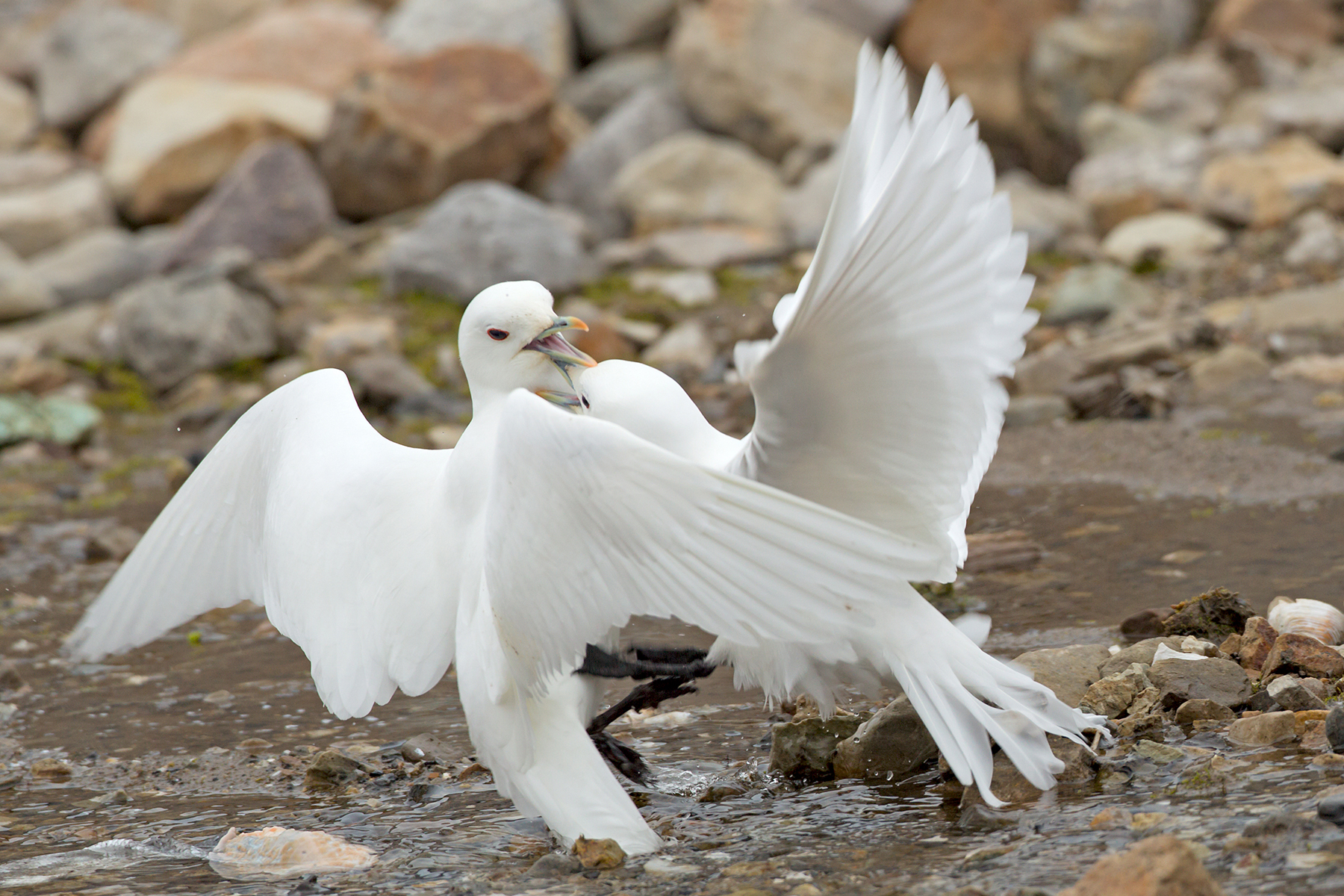
Ivory Gulls fighting (image by Mike Watson)
Zodiac excursion in Svalbard (image by Mike Watson)
Gipsvika (image by Mike Watson)
Polar Cress (image by Mike Watson)
Bearded Seal (image by Mike Watson)
Blue Whale (image by Mike Watson)
Svalbard (image by Mike Watson)
Walruses (image by Mike Watson)
Walrus (image by Mike Watson)
Polar Campion (image by Mike Watson)
The Svalbard-endemic pygmy subspecies of Reindeer (image by Mike Watson)
Rock Ptarmigan (image by Mike Watson)
Ice floes in front of a glacier face (image by Mike Watson)
Ivory Gull (image by Mike Watson)
Little Auk (image by Mike Watson)
Polar Bear family (image by Mike Watson)
Walruses (image by Mike Watson)
Ivory Gull (image by Mike Watson)
Boreal Jacob's Ladder (image by Mike Watson)
Great Skuas (image by Mike Watson)
Arctic Fox (image by Mike Watson)
Red Phalarope male (image by Mike Watson)
Ivory Gull (image by Mike Watson)
Bearded Seal (image by Mike Watson)
Arctic Fox (image by Mike Watson)
Whiplash Saxifrage (image by Mike Watson)
Ivory Gull (image by Mike Watson)
Little Auk (image by Mike Watson)
Red Phalarope male (image by Mike Watson)
Thick-billed Murre or Brünnich's Guillemot (image by Mike Watson)
Polar Bear (image by Mike Watson)
Walrus (image by Mike Watson)
Arctic Fox (image by Mike Watson)
Purple Sandpiper (image by Mike Watson)
Polar Stoloniferous Saxifrage (image by Mike Watson)
Parasitic Jaeger (or Arctic Skua) (image by Mike Watson)
Ivory Gull (image by Mike Watson)
Long-tailed Jaeger or Long-tailed Skua (image by Mike Watson)
Polar Bear (image by Mike Watson)
Atlantic Puffin (image by Mike Watson)
Thick-billed Murres or Brünnich's Guillemots (image by Mike Watson)
Common Ringed Plover (image by Mike Watson)
Red Phalarope female (image by Mike Watson)
Rock Ptarmigan (image by Mike Watson)
Walrus (image by Mike Watson)
Rock Ptarmigan (image by Mike Watson)
Little Auks (image by Mike Watson)
Walrus (image by Mike Watson)
Harbour Seal (image by Mike Watson)
Ingeborgfjellet (image by Mike Watson)
Dane's Dwarf Gentian (image by Mike Watson)
Red Phalarope female (image by Mike Watson)
The pygmy Svalbard form of Reindeer (image by Mike Watson)
Ivory Gull (image by Mike Watson)
Northern Fulmar (image by Mike Watson)
Purple Sandpiper (image by Mike Watson)
Sallyhamna (image by Mike Watson)
Long-tailed Jaeger (or Long-tailed Skua) (image by Mike Watson)


Little Auk (image by Mike Watson)
Thick-billed Murres or Brünnich's Guillemots (image by Mike Watson)
Polar Bear (image by Mike Watson)
Polar Bear and Ivory Gull (image by Mike Watson)
Snow Bunting (image by Mike Watson)
Purple Sandpiper (image by Mike Watson)
Walrus (image by Mike Watson)
Sabines Gull (image by Mike Watson)
Ringed Seal (image by Mike Watson)
Parasitic Jaeger or Arctic Skua (image by Mike Watson)
Polar Bear and glacier (image by Mike Watson)
Polar Bear (image by Mike Watson)
Blue Whale (image by Mike Watson)
Northern Fulmar (image by Mike Watson)
Sabine's Gulls (image by Mike Watson)
Parasitic Jaeger or Arctic Skua (image by Mike Watson)
Ivory Gulls fighting (image by Mike Watson)
Zodiac excursion in Svalbard (image by Mike Watson)
Gipsvika (image by Mike Watson)
Polar Cress (image by Mike Watson)
Bearded Seal (image by Mike Watson)
Blue Whale (image by Mike Watson)
Svalbard (image by Mike Watson)
Walruses (image by Mike Watson)
Walrus (image by Mike Watson)
Polar Campion (image by Mike Watson)
The Svalbard-endemic pygmy subspecies of Reindeer (image by Mike Watson)
Rock Ptarmigan (image by Mike Watson)
Ice floes in front of a glacier face (image by Mike Watson)
Ivory Gull (image by Mike Watson)
Little Auk (image by Mike Watson)
Polar Bear family (image by Mike Watson)
Walruses (image by Mike Watson)
Ivory Gull (image by Mike Watson)
Boreal Jacob's Ladder (image by Mike Watson)
Great Skuas (image by Mike Watson)
Arctic Fox (image by Mike Watson)
Red Phalarope male (image by Mike Watson)
Ivory Gull (image by Mike Watson)
Bearded Seal (image by Mike Watson)
Arctic Fox (image by Mike Watson)
Whiplash Saxifrage (image by Mike Watson)
Ivory Gull (image by Mike Watson)
Little Auk (image by Mike Watson)
Red Phalarope male (image by Mike Watson)
Thick-billed Murre or Brünnich's Guillemot (image by Mike Watson)
Polar Bear (image by Mike Watson)
Walrus (image by Mike Watson)
Arctic Fox (image by Mike Watson)
Purple Sandpiper (image by Mike Watson)
Polar Stoloniferous Saxifrage (image by Mike Watson)
Parasitic Jaeger (or Arctic Skua) (image by Mike Watson)
Ivory Gull (image by Mike Watson)
Long-tailed Jaeger or Long-tailed Skua (image by Mike Watson)
Polar Bear (image by Mike Watson)
Atlantic Puffin (image by Mike Watson)
Thick-billed Murres or Brünnich's Guillemots (image by Mike Watson)
Common Ringed Plover (image by Mike Watson)
Red Phalarope female (image by Mike Watson)
Rock Ptarmigan (image by Mike Watson)
Walrus (image by Mike Watson)
Rock Ptarmigan (image by Mike Watson)
Little Auks (image by Mike Watson)
Walrus (image by Mike Watson)
Harbour Seal (image by Mike Watson)
Ingeborgfjellet (image by Mike Watson)
Dane's Dwarf Gentian (image by Mike Watson)
Red Phalarope female (image by Mike Watson)
The pygmy Svalbard form of Reindeer (image by Mike Watson)
Ivory Gull (image by Mike Watson)
Northern Fulmar (image by Mike Watson)
Purple Sandpiper (image by Mike Watson)
Sallyhamna (image by Mike Watson)
Long-tailed Jaeger (or Long-tailed Skua) (image by Mike Watson)


|
Friday 9th June – Friday 16th June 2028 Leaders: Matt Eade and Oceanwide Expeditions leaders |
8 Days | Group Size Limit 15 |
| Longyearbyen Extension Wednesday 7th June – Friday 9th June 2028 |
3 Days | Group Size Limit 15 |
Birdquest’s Svalbard birding and wildlife tours are surely our most unusual European birding and wildlife journey. Our Svalbard birding and Arctic mammals tour is a fabulous wildlife adventure in this remote Arctic wilderness, offering regular Polar Bear encounters, Ivory Gulls, Little Auks, Thick-billed Murres (Brünnich’s Guillemots), Red Phalaropes, Walruses, Arctic Foxes, Reindeer, various seals and cetaceans and much more besides.
The remote archipelago of Svalbard (sometimes referred to as Spitsbergen, after the largest island in the group) is Europe’s only large High Arctic territory. It extends from over 76°N to nearly 81°N latitude, its northernmost point being only about 1000 kilometres (about 600 miles) from the North Pole! Situated at the same extremely high latitudes as northern Greenland, unlike that area, it can be explored by ship during the summer months, for the warming effects of the Gulf Stream extend even this far north and melt the pack ice to such an extent that the archipelago can be circumnavigated in high summer.
Svalbard, in the form of Spitsbergen island, may have been discovered by the Vikings, but there is insufficient evidence and so its formal discoverer is William Barents who reached the west coast in 1596 while trying to find a Northeast Passage to China and the Pacific. Barents failed in the attempt, being turned back by the ice yet again, but the news of huge numbers of whales and Walruses resulted in further exploration. This led, in the early 17th century, to the establishment of commercial whaling bases by the English, Dutch, Basques and others, while in the 18th and early 19th centuries hunting of Arctic Foxes, Polar Bears and Reindeer for pelts became important. Eventually, coal mining was established by a variety of nations at the beginning of the 20th century, although only a limited amount of mining continues to this day. In 1925 an international treaty granted Norway sole sovereignty over Svalbard (which means ‘northern frontier’ in Norwegian), although the treaty powers, which include Russia, Germany and Britain, retain equal economic rights.
In the 19th and early 20th centuries, Svalbard became the focus of polar exploration and science. Starting with the expeditions of Scoresby, Franklin and Sabine between 1806-1823, numerous expeditions either explored the Svalbard archipelago itself or used the islands as a forward base for attempts on the North Pole. Nansen’s famous ice-strengthened ship Fram emerged from the ice near Svalbard after being trapped for nearly three years and drifting to within a few hundred kilometres of the pole, while the doomed balloon expedition of Andrée left from the northwestern tip of the archipelago, as did Wellman’s unsuccessful attempts by airship, and Amundsen’s by seaplane. Finally, in 1926, Byrd (who was later also to be the first to fly to the South Pole) flew from Ny Ålesund to the North Pole and back.
Today Svalbard is an environmental showcase, having the highest proportion of national parks and nature reserves of any equivalent landmass on earth (the great majority of the archipelago is now protected), and it is the absolutely stunning Arctic scenery and rich Arctic wildlife and plant life that draw visitors intent on more peaceful appreciation of the islands. Here are fantastic pointed mountains draped in snow (the same mountains that gave Spitsbergen its name), enormous interior ice caps, vast glaciers that carve their way down to spectacular fjords, immense areas of sea ice and impossibly blue icebergs carved into weird shapes by the action of wind and sea.
Here too is a rich array of birdlife, including teeming seabird colonies, notably including large numbers of Thick-billed Murres (or Brünnich’s Guillemots) and delightful Little Auks. Some beautiful Arctic shorebirds include the stunning Red Phalarope, while other attractions include the ice-loving Ivory Gull, Pomarine, Parasitic and Long-tailed Skuas (or Pomarine, Arctic and Long-tailed Skuas), Barnacle, Pale-bellied Brent and Pink-footed Geese, and King Eider.
There are also a host of beautiful Arctic wildflowers including Svalbard Poppy, Spider Plant, saxifrages, Polar and Moss Campions, Boreal Jacob’s Ladder, Mountain Avens and arctic buttercups.
The star attraction is of course the huge and powerful Polar Bear, and on this special itinerary that includes a good amount of time amidst the sea ice, it would be nearly impossible to imagine missing this creature that surely epitomises the threats to the Arctic from global warming. In fact, we have an excellent chance of multiple sightings as the north of the archipelago and especially the sea ice further north and northwest are prime areas for the species. The bizarre Walrus is another favourite with visitors, and we can also expect the pretty little Arctic Fox, Reindeer (of the distinctive Svalbard form) and a series of northern seals and cetaceans.
It is important to stress that one travels to Svalbard for the awesome Arctic experience (many people find a Svalbard cruise such an uplifting experience that it ranks as one of the best things they ever did) rather than simply for seeing Polar Bears, Walruses, birds and other wildlife. The species diversity this far north is naturally limited, so you have to be motivated primarily with the idea of seeing a spectacular part of the High Arctic and its natural history – and what an experience it is!
Birdquest has operated Svalbard (Spitsbergen) birding tours since 2004.
The Nature of Svalbard Birding Tours
Svalbard birding & wildlife tours are very different from most birding tours, as we expect you realise, but it is important to understand this and accept how Svalbard birding and wildlife tours roll before signing up for one.
There are, of course, rather few bird species in this High Arctic archipelago, and almost all are easy to find. For this reason, most landings are not about seeing some key avian speciality, but instead enjoyable walks, most in pristine wilderness areas, with a mix of birds, mammals, arctic wildflowers, scenery, history and geology to enjoy. Sometimes there are zodiac cruises at teeming seabird colonies. Our Svalbard expedition is definitely one of those where a partner who is not a keen birder but has a general interest in nature can have a wonderful time.
At most landing sites it is not allowed to split up the group, owing to the potential presence of Polar Bears. Some of the expedition leaders will carry a rifle and thunderflashes, although it is exceedingly unlikely they will ever have to use either during our tour! The usual procedure, if a bear is sighted approaching (as opposed to wandering along in the far distance, ignoring the group), is to retreat to the ship. This only rarely happens.
Accommodation & Transport
We shall be sailing on the MV Ortelius, a converted, ice-strengthened former Dutch naval vessel of 4575 tons and over 91 metres in length, operated by the well-respected Oceanwide Expeditions, who are based in the Netherlands. Ortelius is nowadays one of the relatively few smaller (100 or so passengers) ships available. While comfortable and modern, she is not a ‘cruise ship’ in the traditional manner. She is specifically designed for exploring wild places and enjoying wild nature, rather than carrying huge numbers of people.
Ortelius can accommodate a maximum of 108 passengers in 52 passenger cabins, all with private toilet and shower. Cabins consist of quad cabins with a porthole and two lower single beds and two upper, triple cabins with a porthole and two lower single beds and one upper, twin cabins with a porthole and two lower single beds, twin cabins with a window and two lower single beds, somewhat larger deluxe twin cabins with a window and two lower single beds and superior twin cabins which are almost 50% larger than a standard twin, with at least one window and one queen-sized bed. Cabins have ample storage space and an outside view.
Public facilities include a restaurant/lecture theatre, an observation lounge/bar with panoramic views, a library and a small shop. Food is plentiful, of good quality, waitress-served and prepared by experienced chefs. The ship carries a complement of expedition staff who, as well as guiding excursions ashore and zodiac cruises, double up as guest lecturers and give informal talks on the environment, wildlife and history of the areas visited. The bridge is normally open to all (except when the ship is docking) and provides a great viewpoint whenever it is too breezy to stand comfortably outside.
Much of the sailing is done at night (or what passes for ‘night’ in summer in high latitudes), thus maximising opportunities for going ashore and enjoying the harsh but beautiful landscapes of Antarctica to the full. Landings are carried out using a fleet of Zodiacs/Naiads, the rugged, fast-moving type of inflatable first developed by Jacques Cousteau for expedition work, which allows safe landings on remote coastlines in all types of conditions.
Further information about the ship is available on the Oceanwide Expeditions website: https://oceanwide-expeditions.com/our-fleet/m-v-ortelius
Those taking the Longyearbyen Extension will stay in a good quality hotel, and exploration of the limited road network will be by minibus/passenger van. Roads outside the town are well-graded dirt.
Walking and Landings
The walking during our Svalbard birding & wildlife tour is mostly easy (walks tend to be short distance), although there are uphill, boggy or stony areas at times which make some walks a bit harder. Zodiac embarkation and disembarkation are superbly handled by the crew and expedition staff.
Climate
Surprisingly mild for so far north, due to the warming effects of the Gulf Stream. Temperatures average around 5-10°C at all times of day (there is no night, of course), although it can feel warmer on still, sunny days ashore and correspondingly colder on overcast, breezy days on the ship, or while in the sea ice. There is usually little rainfall and sunny periods are interspersed with overcast weather. Some fog is likely.
Bird/Mammal Photography
Opportunities during our Svalbard birding & wildlife tour are good (and scenic photography is simply outstanding).
Important:
You need to bear in mind that circumstances may be encountered during our Svalbard birding & wildlife tour which will make it necessary or desirable to deviate from the planned itinerary. These circumstances include poor weather conditions and unexpectedly heavy drift ice. This is the High Arctic wilderness, and conditions vary between years and indeed from month to month or even day to day.
Getting to Longyearbyen in good time
Owing to the possibility, however small, of a severe airline delay, we would strongly recommend that all participants on our Svalbard birding and wildlife tour have at least one hotel night at Longyearbyen prior to the expedition start. Alternatively, you can enjoy our very rewarding 2-night Longyearbyen Extension. Kindly note that in the event you do not arrive in time, the ship will not wait, and neither the cruise operator nor ourselves can make a refund in such circumstances. Arriving early also has the advantage that your luggage should still catch up with you, should it be delayed. We can make hotel bookings in Longyearbyen for you on request.
To see a larger map, click on the square-like ‘enlarge’ icon in the upper right of the map box.
To see (or hide) the ‘map legend’, click on the icon with an arrow in the upper left of the map box.
To change to a satellite view, which is great for seeing the physical terrain (and for seeing really fine details by repetitive use of the + button), click on the square ‘map view’ icon in the lower left corner of the ‘map legend’.
Birdquest Inclusions: Our tour prices include transportation, accommodations, meals (except lunch in Longyearbyen on arrival day) and entrance fees.
Exclusions: Gratuities for the expedition staff and crew are not included in the tour price. The level of gratuities is entirely a matter for personal discretion. The expedition staff and crew work very long hours to make such cruises a success, and most passengers give gratuities of around €150-200 at the conclusion of the cruise.
Deposit: 20% of the total tour price. Our office will let you know what deposit amount is due, in order to confirm your booking, following receipt of your online booking form.
Please note that if you are willing to share, but no cabin-mate is available, you will not have to pay the single occupancy supplement.
This tour is priced in Euros. Amounts shown in other currencies are indicative.
TO BOOK THIS TOUR: Click here (you will need the tour dates)
For Longyearbyen/Longyearbyen arrangements:
Expedition dates and prices are provisional
€4,350, £3880, $4880, AUD7,090 in a Quadruple Porthole Cabin with 2 upper and 2 lower berths and private bathroom
€5,400, £5540, $6980, AUD8,800 in a Triple Porthole Cabin with 1 upper and 2 lower berths and private bathroom
€6,050, £5540, $6980, AUD9,860 in a Twin Porthole Cabin with 2 single beds and private bathroom
€6,550, £5960, $7500, AUD10,680 in a Twin Window Cabin with 2 single beds and private bathroom
€7,000, £6420, $8080, AUD11,410 in a Twin Deluxe Cabin with 2 single beds and private bathroom
€7,800, £7170, $9030, AUD12,710 in a Superior Cabin with double bed and private bathroom
Single occupancy supplement: 70% of the shared cabin rate.
LONGYEARBYEN EXTENSION
€1,100, £960, $1,270, AUD1,790.
Single room supplement: €300, £260, $350, AUD490.
Svalbard: Day 1 If the weather is good, it will be a spectacular introduction to the tour to fly to Longyearbyen, perhaps via Tromsø in Arctic Norway. First, one crosses the mountains, lakes and fjords of Norway and then, after a long sea crossing, the even more impressive mountains of Spitsbergen, which stretch away far into the distance. This will be just a foretaste of the magic to come.
Our Svalbard birding & wildlife tour begins at Longyearbyen in the afternoon.
There is usually time, before embarkation, to explore Longyearbyen, the only place on Spitsbergen that qualifies for the term ‘town’, although it is very small. Originally established to serve the Norwegian coal mines, which still exist but are unused, the town now serves as the administrative centre for the islands and has a growing tourist business, as well as a university. The gaily painted wooden houses and the small but modern shopping centre look strangely out of place amidst the looming, snow-covered fells and the waters of the Isfjorden.
After we board our ship late this afternoon and settle into our cabins, there will be a briefing, and then we will set sail towards the mouth of the magnificent Isfjorden and the open sea, accompanied by the first of many Northern Fulmars (most of the dark morph, characteristic of these high latitudes). Northern Minke Whales are fairly regular in Isfjorden.
Svalbard: Days 2-7 Our itinerary will be determined by the present position of the heavy drift ice. The general intention is to explore northern Spitsbergen and possibly even the Seven Islands north of Nordaustlandet, as long as ice conditions permit. After that, our ship heads into the sea ice that lies to the north and northwest of Svalbard.
Every cruise in Spitsbergen is different: the locations mentioned below are some of the places that we may visit, but there are many others that are undescribed, but equally wonderful.
To the north of the long, narrow island off northwest Spitsbergen known as Prins Karl Forland is Kongsfjorden, a spectacular fjord full of glaciers and snowy mountains.
Blomstrandhalvøya makes for a fascinating landing site in Kongsfjorden. Here a rather roguish English entrepreneur started up marble-mining operations in the early years of the 20th century, only to discover, once the ice thawed after shipping the slabs south, that the marble was cracked and so of poor quality! The owner’s hut and various rusting pieces of machinery still bear testimony to this financial disaster. Behind the shoreline the stony tundra rises towards a high, partly snow-covered range of hills.
We may not have time for a landing, but if we do we may see the only accessible nesting Long-tailed Jaegers in Spitsbergen. We may be able to enjoy watching one of these elegant birds guarding its nest while the off-duty partner patrols past, keeping a wary eye on us. Further into the interior, Rock Ptarmigans haunt the scree slopes. At this time of year the male ptarmigan are still largely white, and so they are relatively easy to spot as they survey their territories from the tops of large boulders or rocky crags. The females, however, have already moulted into their amazingly cryptic summer plumage. The curious Svalbard form of the Reindeer, which has short legs that make it appear almost wild goat-like, can also be found here.
Across the fjord is the scientific research base of Ny Ålesund, the most northerly settlement on Earth. Once the site of a coal mine, Ny Ålesund was the jumping-off point, or arrival point, for a series of polar expeditions by air, including Amundsen’s almost-successful flight of 1910, Byrd’s successful flight and Amundsen and Nobile’s successful airship voyage on the Norge in 1926, and finally Nobile’s doomed voyage on the airship Italia in 1928. The tall anchor mast for the airships stands to this day.
We may visit Raudfjorden on the north coast of Spitsbergen. This expansive fjord is spilling with glaciers, often visited by Ringed and Bearded seals. The cliffs and shoreline also support thriving seabird colonies and rich vegetation, while Polar Bears are a distinct possibility. We will try to land at Alicehamna or Buchananhalvøya.
Further east is spectacular Liefdefjorden. This is a great area for Polar Bears, which in this area survive the lean summer months by hunting seals on the remaining ice in the more protected bays. We have an excellent chance of seeing one or more while in this area. Seeing one of these huge beasts as it walks along the shoreline or across the ice is an awesome experience: those cold black eyes, the inquisitive facial expression and the fearless behaviour all impress! Alternatively, we might come across one swimming between the islands or areas of fjord ice. We may also encounter Northern Minke Whale in this area.
Pink-footed and Pale-bellied Brent Geese nest in the area too, as do Long-tailed Ducks, Common Eiders, the beautiful King Eider, Purple Sandpipers, Great Skua and Parasitic Jaeger (or Arctic Skua). Ivory Gulls are fairly regular here, especially at the Monacobreen and probably breed in the stark mountains nearby. Watching one flying over the equally white ice, with the blue-black and white peaks behind, is a highly evocative Arctic experience. At the head of Liefdefjorden is the huge Monacobreen (Monaco Glacier). If ice conditions permit, we will sail through the broken floes until we are quite close to the spectacular front of this immense glacier and its smaller but equally impressive neighbour the Idabreen. We will admire the faces of the glaciers, including the extraordinary pattern of cracks, crevices and recesses in the ice and of course the deep blue colour of the dense glacier ice. We should come across one or more weirdly sculpted blue icebergs. Wild, snow-covered peaks line the glaciers and the fjord sides, adding to the majesty of this extraordinary place.
On our Svalbard (Spitsbergen) birding & wildlife tours we sometimes pass close by Moffen, a low-lying island with a shallow lagoon off the north coast of Spitsbergen where landings are not allowed. This is a favoured haul-out area for male Walruses, and we are likely to observe several groups resting on the beach, perhaps amounting to 100 or more. The island is also one of the few places in Spitsbergen where the small but beautiful Sabine’s Gull nests, and we could see a number flying around the island. Moffen is situated at over 80°N and so seems almost within striking distance of the pole!
Alternatively, the expedition leader may elect to visit the Sjuøyane (or Seven Islands), situated to the north of Nordaustlandet, the most northeasterly large island in Svalbard.
Walruses generally feed in shallow water, and we may encounter one or two hauled out on slabs of ice amongst the fjords of Spitsbergen, particularly if there is too much ice onshore for them to haul out easily on a beach. Seeing a large male Walrus at close range is truly impressive, especially when one can count every bristle on that amazing face! We may also see these bizarre creatures in the water, watching them roll around or rear their heads up to see what is happening, squinting along those huge tusks. We hope to be able to make a landing at a favoured Walrus haulout at Phippsoya, where these strange creatures look for all the world like a heap of gigantic brown slugs as they sleep away while wallowing in decomposing kelp! If a new arrival turns up, there may be a brief kafuffle as the newcomer shuffles its way into the midst of the heap, causing some rearing up and tusk stabbing, not to mention some outraged bellowing!
After we leave the last land behind, we head north or northwest towards the ice edge. Excitement will surely mount at the prospect of reaching this strange, half-solid, half-liquid world. Quite often one goes to sleep with only the sea in sight and wakes up in the white world of the sea ice!
Being amongst the sea ice is one of the joys of a polar voyage. The floes often lie jumbled at random across the surface of the sea, sometimes widely spaced, with just small pieces of ice in between, and sometimes crammed together. Our skilful captain, an expert in polar navigation, will take our ship safely through this stark landscape. Being amongst the ice is one of the very best times of any Svalbard journey, and as we gaze out across floes of every shape and size, ranging from brilliant white to an incredibly deep blue, we will be reminded that it is truly good to be alive when one can experience such extraordinary wonders!
We should have quite a lot of time in the ice, but a lot depends on how far the ice front lies from northern Svalbard and the weather conditions at the time. If conditions are favourable, we will have a multi-day visit.
So why have we come so far from land? Because this is where we can expect wonderful encounters with Polar Bears. Not always very close, although they regularly approach ships (that curiosity leads them to us), but sightings could well be frequent in this strange environment that is their home for much of the year.
While we sail along the edge of the pack ice looking for bears, we are also likely to come across the incomparable Ivory Gull, a species that frequently follows Polar Bears hoping to feast on scraps after a bear kills a seal.
It is not just the ice which is fascinating, but the wildlife that survives and prospers here. Bearded and Ringed Seals haul themselves up on the floes and can often be approached closely by the ship, while Harp Seals tend to be more wary. Black-legged Kittiwakes dip down to feed on small Arctic Cod and shrimps, and Little Auks (or Dovekies), Thick-billed Murres (or Brünnich’s Guillemots) and smart Black Guillemots fish in the leads or haul themselves up onto the ice floes. Pomarine Skuas (or Pomarine Jaegers) with spectacular ‘spoon-ended’ tail projections sometimes gather here on migration to harry the kittiwakes in the hope they will disgorge their last meal.
It will be hard to drag ourselves away from the ice, but return to ‘civilisation’ we must. On the way back to Longyearbyen we may land at Polepynten, situated on Prins Karl Forland, which is a famous Walrus haul-out.
The run back into Isfjorden is often good for cetaceans, including Fin Whale and sometimes the mighty Blue Whale.
Our final landing may be at Alkhornet where the dramatic cliffs harbour large numbers of auks (or alcids) will have become apparent, and the noise and characteristic smell of a big seabird colony will soon surround us. Thousands of Thick-billed Murres (or Brünnich’s Guillemots) nest here, alongside much smaller numbers of Black-legged Kittiwakes. Arctic Foxes forage under the seabird cliffs, hoping to find fallen eggs. Out to sea, pieces of drift ice provide platforms for guillemots to haul themselves out on, where they look for all the world like penguins in the Antarctic!
Svalbard: Day 8 This morning we will disembark in Longyearbyen, where our Svalbard (Spitsbergen) tour ends at Longyearbyen airport. We will be sad to leave our ship and the crew and expedition staff behind after such an adventure together.
Longyearbyen: Day 1
The extension begins this evening at our hotel in Longyearbyen on the main island of Spitsbergen in Svalbard. Longyearbyen, the only place in Svalbard that qualifies for the term ‘town’, is still a very small place. Originally established to serve the Norwegian coal mines, which still exist but are unused, the town now serves as the administrative centre for the islands and has a growing tourist business, as well as a university. The gaily painted wooden houses and the small but modern shopping centre look strangely out of place amidst the looming, snow-covered fells and the waters of the Isfjorden.
Longyearbyen: Day 2
Just outside the town, we can admire one of the world’s most unusual and charismatic road signs – a red triangular warning sign with a Polar Bear silhouette and the wording ‘applies to all Spitsbergen!’ Although Polar Bears are usually wary of humans, there have been exceptions over the years and even hikers and kayakers here are expected to carry flares and a rifle – just in case!
We should see Snow Buntings in the town itself, and not far away we can expect to come across cooing Common Eiders, Long-tailed Ducks in their beautiful summer plumage, Common Ringed Plovers, Dunlins and some very tame Purple Sandpipers, while Arctic Terns will be constant companions. Glaucous Gulls are the common large gulls here, but occasionally they are joined by a vagrant Iceland Gull or one of Spitsbergen’s few resident Greater Black-backed Gulls.
The town’s husky kennels are situated nearby, and we can go up and see these interesting wolf-like animals at close quarters: perhaps they will start howling in unison, making that wolf-like impression all the stronger. Sometimes an Ivory Gull or two lingers here into summer, although they have become rare in recent years.
Further from the town, along the few roads, the tundra pools provide nesting sites for the stunning Red (or Grey) Phalarope and the birds can also be found feeding along the shoreline of Isfjorden. We should enjoy some fantastic, close-up views of these beautifully plumaged and very confiding little birds as they swim along in the shallows right in front of us, stopping frequently to pick insects from the water’s surface. We will soon learn to distinguish the deep red females from the more pastel-shaded males.
Red-throated Loons (or Red-throated Divers) and Long-tailed Ducks also nest at the pools, and this is also a good area for King Eider, and we may find a collection of different plumage types, hopefully including an adult male still in good plumage and showing off its extraordinary orange bill shield.
Arctic Terns nest noisily along the shorelines and around the pools, and we may see diminutive grey-brown Arctic Foxes carefully searching for chicks. Barnacle and Pink-footed Geese feed on the boggy slopes, the former placing their nests on cliff edges or rocky pinnacles where they are safe from foxes, or at least better able to defend themselves. Parasitic Jaegers (or Arctic Skuas), Ruddy Turnstones and Purple Sandpipers also nest on the slopes.
The strange Svalbard ‘pygmy’ form of the Reindeer, which has short legs that make it appear almost wild goat-like, can also be found in the area, and sometimes they allow a close approach.
The surroundings of Isfjorden are some of the warmest parts of Svalbard during summer, because of the distance from the ocean, and the area has a rich flora by High Arctic standards. The extraordinary greens, buffs and browns of the tundra mosses contrast with the greys of the rocks, spattered with red, green and whitish lichens. Purple Saxifrage is everywhere, sometimes forming carpets of colour, and we can also expect to find many other Arctic wildflowers including Mountain Avens and the delightful little Svalbard Poppy.
In more mountainous terrain, beautiful Rock Ptarmigans haunt the rocky slopes, even occurring at the edge of town. At this time of year, the ptarmigans are in their beautiful and amazingly cryptic summer plumage.
Little Auks (or Dovekies) nest in the mountains and scree slopes around Longyearbyen and one often sees large flocks flying to and from colonies high amongst the mountain crags. Mercifully, we don’t need to scale the heights as there is a perfectly accessible colony along the coast. Here, the boulder slopes provide countless crevices for nesting Little Auks, and we will be able to work our way cautiously to the edge of the colony. At this time of year, the birds are busy feeding their young. As we gaze across the slopes, we will be able to see lots of little black and white birds clustered on the boulders, and by carefully creeping up on these splendid little alcids, we should be able to get stunning views and photographs from close range. Flocks of birds are constantly coming and going at the colony, and just hearing the maniacal cackling of the birds is something special in itself. Every so often, a Glaucous Gull (or more rarely a Great Skua) patrols the slopes, creating a frenzy of activity as many birds take to the air. As these fast-flying flocks sweep overhead, the sound of their wings and their loud cries fill the air. Indeed, the whole experience here is quite wonderful for anyone who loves birds, and is of course unique to the High Arctic. A very different experience all round from seeing a solitary Little Auk in winter bobbing distantly on the water off some headland, or whirring past at extreme range!
Longyearbyen: Day 3 We have a final day to explore the Longyearbyen area before boarding our ship in the late afternoon.

North America & The Caribbean