Email birders@birdquest-tours.com
Telephone 07777 186845
(International +44 7777 186845)
Email birders@birdquest-tours.com
Telephone 07777 186845
(International +44 7777 186845)
Africa and its islands
Bannerman's Turaco (image by Nik Borrow)
Scissor-tailed Kite (image by Nik Borrow)
Cameroon Sunbird (image by Nik Borrow)
Long-tailed Hawk (grey morph) (image by Pete Morris)
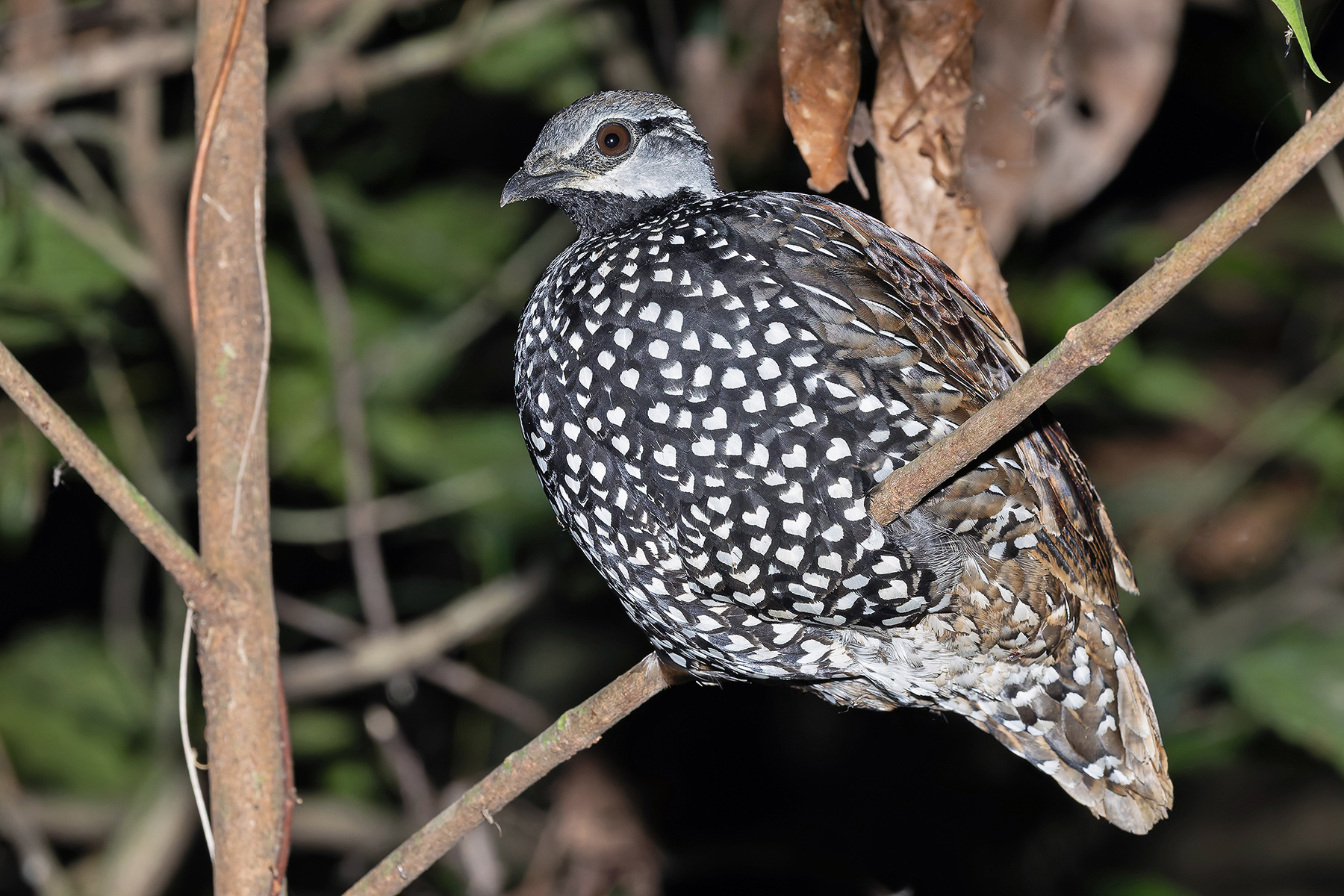
Latham's Francolin (image by Pete Morris)
Clapperton's Francolin (image by Nik Borrow)
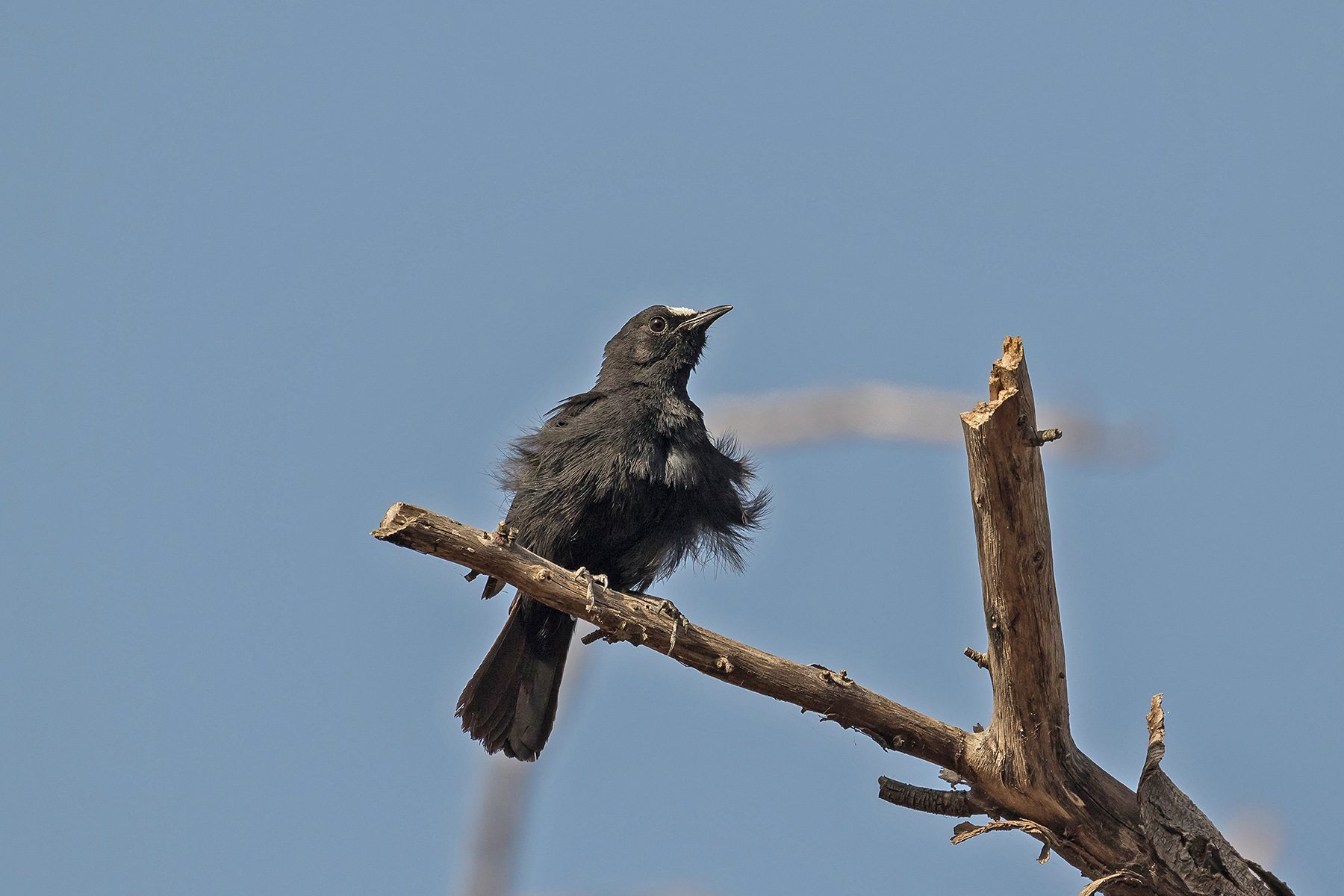
White-fronted Black Chat (image by Pete Morris)
Grey-necked Rockfowl (image by Pete Morris)
Standard-winged Nightjar (image by Pete Morris)
Yellow-winged Pytilia (image by Pete Morris)
Red-throated Bee-eater (image by Pete Morris)
Grey-headed Broadbill (image by Pete Morris)
Woodhouse's Antpecker (image by Nik Borrow)
Spotted-thrush Babbler (image by Pete Morris)
Black-bellied Seedcracker (image by Nik Borrow)
Congo Serpent Eagle (image by Pete Morris)
Adamawa Turtle Doves (image by Pete Morris)
Sjöstedt's Owlet (image by Nik Borrow)
Sun Lark (image by Nik Borrow)
Long-tailed Nightjar (image by Pete Morris)
White-throated Mountain Babbler (image by Pete Morris)
Hartlaub's Duck (image by Nik Borrow)
Red-chested Owlet (image by Nik Borrow)
Heuglin's Wheatear (image by Pete Morris)
Banded Prinia (image by Nik Borrow)
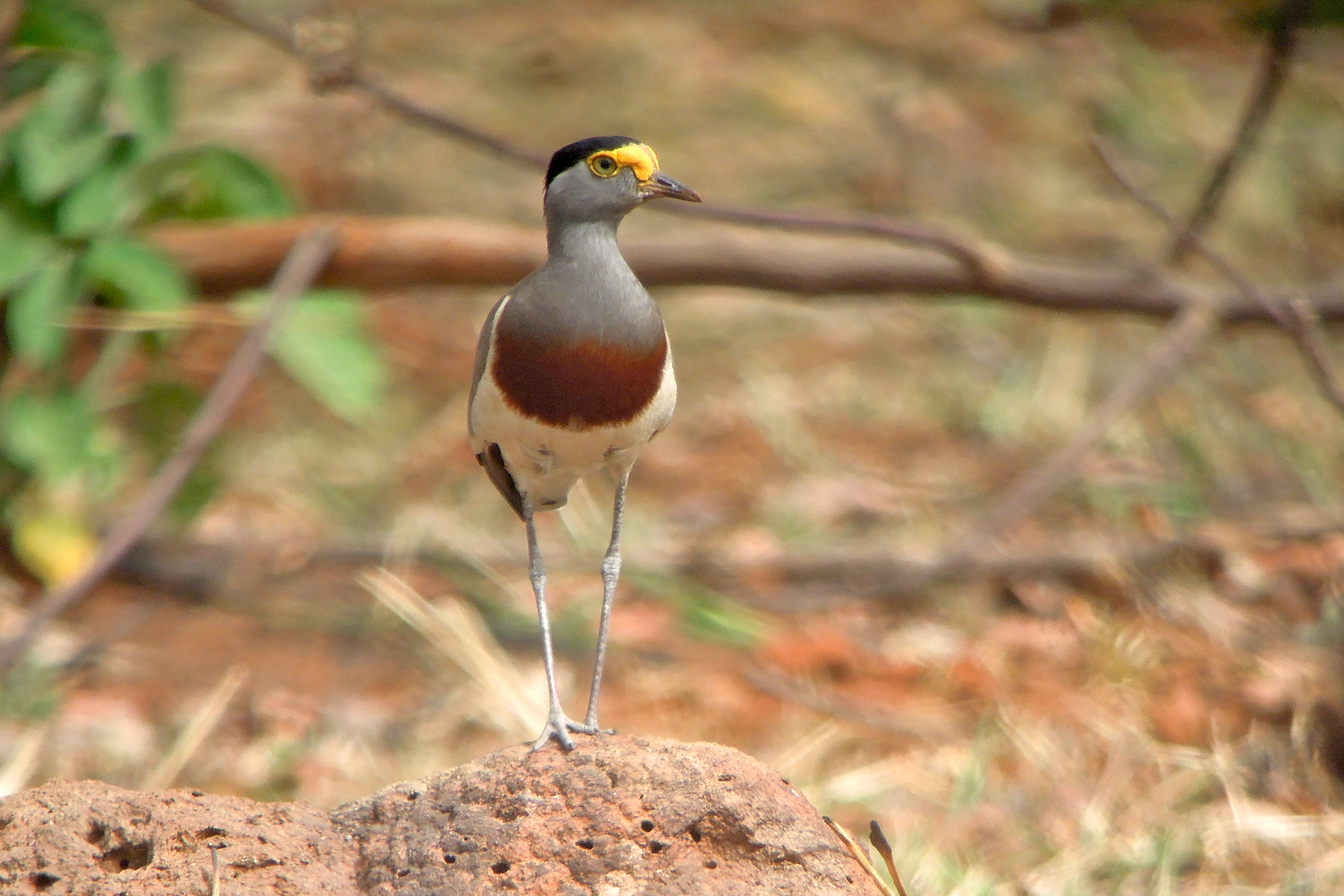
Brown-chested Lapwing (image by Nik Borrow)
Black-shouldered Nightjar (image by Pete Morris)
Mount Cameroon Speirops (image by Nik Borrow)
Violet Turaco (image by Pete Morris)
Blue-breasted Bee-eater (image by Pete Morris)
Pygmy Sunbird (image by Pete Morris)
Bamenda Apalis (image by Pete Morris)
Yellow-breasted Boubou (image by Nik Borrow)
Grey-headed Broadbill (image by Nik Borrow)
White-throated Francolin (image by Nik Borrow)
Banded Wattle-eye (image by Nik Borrow)
Blue-bellied Roller (image by Pete Morris)
Chestnut-capped Flycatcher (image by Nik Borrow)
Red-rumped Tinkerbird (image by Nik Borrow)
Yellow-bellied Wattle-eye (image by Nik Borrow)
Yellow-footed Flycatcher (image by Nik Borrow)
Chocolate-backed Kingfisher (image by Nik Borrow)
Mountain Robin Chat (image by Pete Morris)
Standard-winged Nightjar (image by Nik Borrow)
Neumann's Starling (image by Nik Borrow)
Bannerman's Weaver (image by Nik Borrow)
Mountain Robin-Chat (image by Nik Borrow)
Brown-chested Alethe (image by Nik Borrow)
Brown-rumped Bunting (image by Nik Borrow)
Golden Nightjar (image by Nik Borrow)
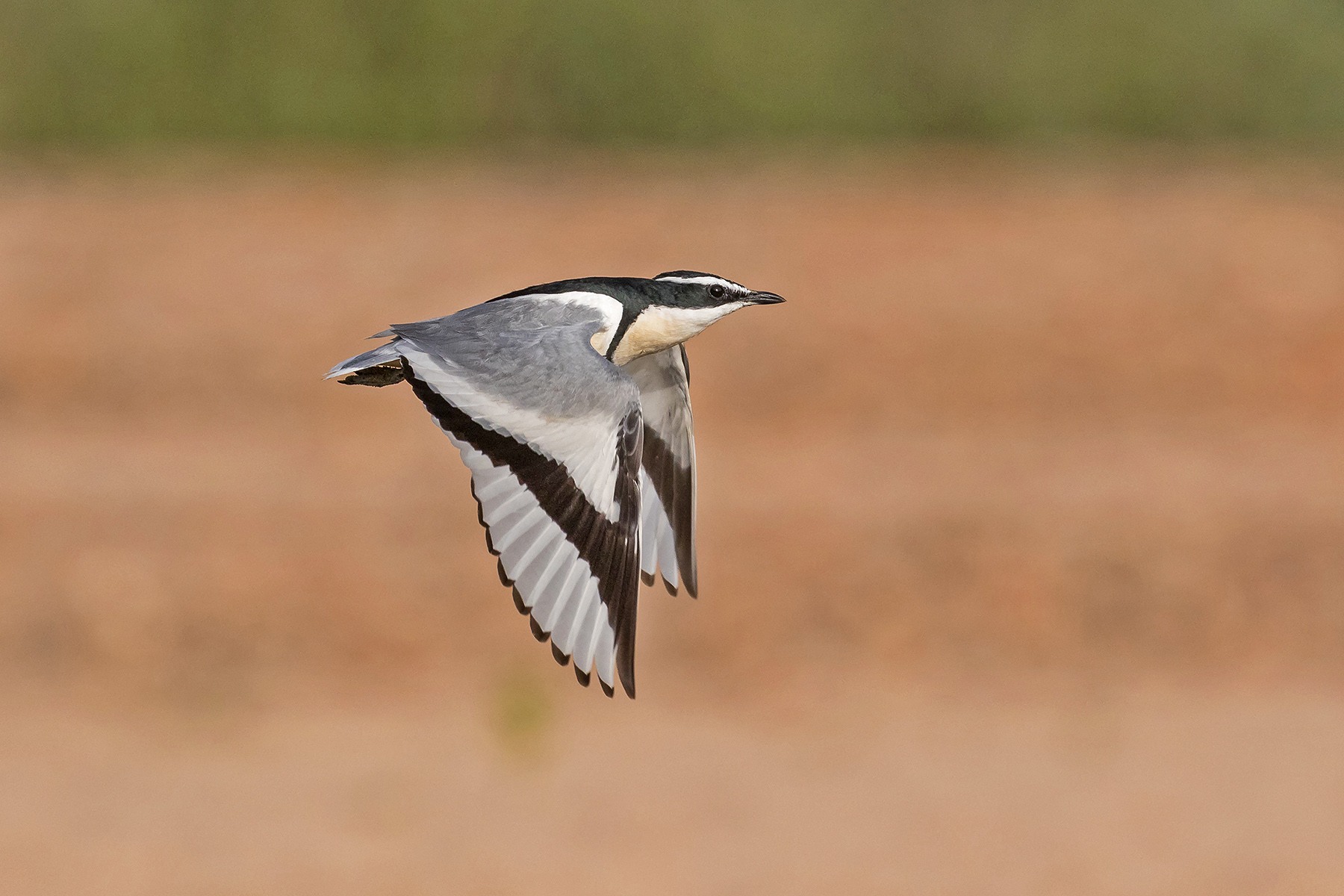
Egyptian Plover (image by Pete Morris)
Brown-backed Cisticola (image by Nik Borrow)
Reichenbach's Sunbird (image by Pete Morris)
Egyptian Plover (image by Nik Borrow)
Pel's Fishing Owl (image by Pete Morris)
Brown-rumped Bunting (image by Pete Morris)
Chattering Cisticola (image by Nik Borrow)
Rufous-sided Broadbill (image by Pete Morris)
Schlegel's Francolin (image by Nik Borrow)
Bamenda Apalis (image by Nik Borrow)
Bare-cheeked Trogon (image by Nik Borrow)
Hartlaub's Ducks (image by Nik Borrow)
Northern White-faced Owl (image by Pete Morris)


Bannerman's Turaco (image by Nik Borrow)
Scissor-tailed Kite (image by Nik Borrow)
Cameroon Sunbird (image by Nik Borrow)
Long-tailed Hawk (grey morph) (image by Pete Morris)
Latham's Francolin (image by Pete Morris)
Clapperton's Francolin (image by Nik Borrow)
White-fronted Black Chat (image by Pete Morris)
Grey-necked Rockfowl (image by Pete Morris)
Standard-winged Nightjar (image by Pete Morris)
Yellow-winged Pytilia (image by Pete Morris)
Red-throated Bee-eater (image by Pete Morris)
Grey-headed Broadbill (image by Pete Morris)
Woodhouse's Antpecker (image by Nik Borrow)
Spotted-thrush Babbler (image by Pete Morris)
Black-bellied Seedcracker (image by Nik Borrow)
Congo Serpent Eagle (image by Pete Morris)
Adamawa Turtle Doves (image by Pete Morris)
Sjöstedt's Owlet (image by Nik Borrow)
Sun Lark (image by Nik Borrow)
Long-tailed Nightjar (image by Pete Morris)
White-throated Mountain Babbler (image by Pete Morris)
Hartlaub's Duck (image by Nik Borrow)
Red-chested Owlet (image by Nik Borrow)
Heuglin's Wheatear (image by Pete Morris)
Banded Prinia (image by Nik Borrow)
Brown-chested Lapwing (image by Nik Borrow)
Black-shouldered Nightjar (image by Pete Morris)
Mount Cameroon Speirops (image by Nik Borrow)
Violet Turaco (image by Pete Morris)
Blue-breasted Bee-eater (image by Pete Morris)
Pygmy Sunbird (image by Pete Morris)
Bamenda Apalis (image by Pete Morris)
Yellow-breasted Boubou (image by Nik Borrow)
Grey-headed Broadbill (image by Nik Borrow)
White-throated Francolin (image by Nik Borrow)
Banded Wattle-eye (image by Nik Borrow)
Blue-bellied Roller (image by Pete Morris)
Chestnut-capped Flycatcher (image by Nik Borrow)
Red-rumped Tinkerbird (image by Nik Borrow)
Yellow-bellied Wattle-eye (image by Nik Borrow)
Yellow-footed Flycatcher (image by Nik Borrow)
Chocolate-backed Kingfisher (image by Nik Borrow)
Mountain Robin Chat (image by Pete Morris)
Standard-winged Nightjar (image by Nik Borrow)
Neumann's Starling (image by Nik Borrow)
Bannerman's Weaver (image by Nik Borrow)
Mountain Robin-Chat (image by Nik Borrow)
Brown-chested Alethe (image by Nik Borrow)
Brown-rumped Bunting (image by Nik Borrow)
Golden Nightjar (image by Nik Borrow)
Egyptian Plover (image by Pete Morris)
Brown-backed Cisticola (image by Nik Borrow)
Reichenbach's Sunbird (image by Pete Morris)
Egyptian Plover (image by Nik Borrow)
Pel's Fishing Owl (image by Pete Morris)
Brown-rumped Bunting (image by Pete Morris)
Chattering Cisticola (image by Nik Borrow)
Rufous-sided Broadbill (image by Pete Morris)
Schlegel's Francolin (image by Nik Borrow)
Bamenda Apalis (image by Nik Borrow)
Bare-cheeked Trogon (image by Nik Borrow)
Hartlaub's Ducks (image by Nik Borrow)
Northern White-faced Owl (image by Pete Morris)


|
Saturday 20th February – Saturday 13th March 2027 Leaders: Pete Morris and a local guide |
22 Days | Group Size Limit 7 (tour full) |
|
Saturday 5th February – Saturday 26th February 2028 Leaders: Mark Van Beirs and a local guide |
22 Days | Group Size Limit 7 (tour guaranteed) |
|
Saturday 3rd February – Saturday 24th February 2029 Leaders: Mark Van Beirs and a local guide |
22 Days | Group Size Limit 7 |
Birdquest’s Cameroon birding tours are surely not just the best there is in this bird-rich country, but even the ‘ultimate West African birding trip’. There is simply no other destination in the region that comes close in terms of endemics, near-endemics and regional specialities! Our Cameroon birding tour has a very comprehensive itinerary and produces more West African specialities than any other. A wonderful bonus in Cameroon is an excellent chance of seeing members of three monotypic or very small bird families, including the sought-after Grey-necked Rockfowl or Red-headed Picathartes, Egyptian Plover and Grey-chested Babbler (the latter is now placed in the Dapple-throat & Allies family).
Cameroon, lying a little north of the Equator, straddles the geographical dividing line between West and Central Africa. This marvellous country, immortalised for all wildlife enthusiasts by Gerald Durrell’s memorable account of his zoo-collecting expedition, ‘The Bafut Beagles’, offers the most exciting birding in West Africa. Nearly 900 species have been recorded from the country, far more than from any other comparable area in West Africa, and nearly 30 endemic or near-endemic species (the exact figure depends on the taxonomy followed) grace this impressive total.
Cameroon’s avian treasure house stems directly from a wealth of habitats combined with the long isolation of its southwestern highlands from other upland areas in Africa. The northern panhandle of Cameroon extends deep into the Sahel, the semi-desert zone immediately south of the Sahara, reaching as far as the shores of Lake Chad, while in the south, where the country abuts the Gulf of Guinea and the Congo basin, the climate is equatorial and the natural vegetation is primary rainforest and humid montane forest.
Not only is Cameroon a land of natural diversity, but also a country with a rich cultural tradition dating back many centuries. From the heraldic carved designs of the palaces of the Fons in the Bamenda Highlands to the vivid colours of the dresses of the market traders, the vigorously executed handicrafts and the rhythm of the local music, Cameroon is a constant reminder of the vibrancy of West African culture.
With the richest avifauna of any West African country, Cameroon is a classic destination and one that any birder who has visited other regions of Africa will be tempted to explore. Our comprehensive journey through this fantastic country has been specifically designed to sample all of its major habitats, and importantly, have enough time in them to do really well, so as a direct result, it produces more specialities than any other bird tour. By the end of our search for Cameroon’s numerous specialities, we shall have seen a remarkable series of rarely seen birds!
Our Cameroon birding tour starts at Douala, the commercial capital of the country, situated in southern Cameroon.
From there, we shall head for northernmost Cameroon and the Sahel. Specialities of the Maroua area include the range-restricted Rock Firefinch, Clapperton’s Spurfowl and Fox Kestrel, as well as a series of interesting Sahelian species including African Collared Dove, Viellot’s Barbet, Senegal Batis, Red-pate Cisticola, Black Scrub Robin, Chestnut-bellied Starling, Pygmy Sunbird, Chestnut-crowned Sparrow-Weaver and Gosling’s Bunting.
From the far north, we will move southwards into greener, more wooded terrain. First, we will visit the Garoua region, where our prime target is the highly range-restricted Chad Firefinch.
At Bénoué National Park, the attractive riverine woodland provides sanctuary for species such as Adamawa Turtle Dove, Violet Turaco, Bearded Barbet, Grey-headed Oliveback and the marvellous Oriole Warbler (or Moho). The sandy riverbeds are home to the exquisite Egyptian Plover, and the enormous Pel’s Fishing Owl is sometimes seen along its banks. The dry woodland and scrub are home to White-throated Francolin, Dorst’s Cisticola, Red-winged Grey Warbler, West African Seedeater and Brown-rumped Bunting.
Next, we climb onto the verdant Adamawa Plateau with its mosaic of woodland, rivers and grassland. Here we will stay at a ranch overlooking a pretty crater lake that is one of the few known localities for the rare Bamenda Apalis, and where the evening roosting flights of thousands of egrets and starlings (including the localised White-collared Starling) are truly spectacular. Other specialities include Spotted Thrush-Babbler and Brown and Dybowski’s Twinspots. There are also chances here for Brown-chested Lapwing and the range-restricted Schlegel’s Francolin.
After returning southwards to Douala by air, we will first explore Mount Cameroon. Rising straight from the ocean to 4070m, this isolated peak (an active volcano) holds many montane specialities, in particular Cameroon Olive Pigeon, Mountain Saw-wing, ‘Cameroon’ Scrub Warbler and the charming Mount Cameroon Speirops. Mount Cameroon Spurfowl is only a slim possibility.
Next, we will visit Mount Kupe, an isolated mountain that is home to some of the rarest birds in West Africa, most famously the Mount Kupe Bushshrike, which in 1998 was also discovered in the nearby Bakossi Mountains. During our stay in the area, during which we will visit the Bakossi Mountains as well as explore Mount Kupe, we shall be on the lookout for this great rarity, and we will also encounter many other montane forest specialities whilst doing so. In particular, we will be hoping to add Fiery-breasted and Many-coloured to our bushshrike list and also looking for endemic or near-endemic specialities such as Grey-headed Greenbul, Crossley’s Ground Thrush, White-tailed and Black-capped Woodland Warblers, White-throated Mountain Babbler and Ursula’s Sunbird.
From Mount Kupé, we will head northwest until we reach the intensively cultivated Bamenda Highlands in the formerly British sector of the country. Here, the endemic birds, including the rare and beautiful Bannerman’s Turaco, Bangwa Forest Warbler, Banded Wattle-eye and Bannerman’s Weaver, as well as Cameroon Olive Greenbul, Mountain Robin Chat, Green Longtail, Grey-chested Babbler (now placed with Spot-throat and Dapple-throat in its own family), Yellow-breasted Boubou, Green-breasted Bushshrike, Cameroon Sunbird, and Shelley’s Oliveback, cling to a precarious existence in the remaining patches of forest.
Heading south, we come to the town of Edéa. Here we will visit a site for Hartlaub’s Duck and visit the Sanaga River with its exposed sandbanks that are home to good numbers of Grey Pratincole and African Skimmers.
Afterwards, we will continue southwards towards the Equatorial Guinea border and pay an extended visit to Campo Ma’an National Park. An exploration of the rainforest here will give us the chance to observe numerous lowland forest species, and in particular, we will have a wonderful chance of seeing one of the strangest birds that inhabits the entire continent, the bizarre Grey-necked Rockfowl (or Red-headed Picathartes). The area holds a good number of birds, and the closest site to see the birds is an ‘easy’ ten-minute walk from the vehicles!
Other great birds we have a good chance of encountering include a fine series of hornbills, an extraordinary variety of greenbuls, Gabon Coucal, Bare-cheeked Trogon, Yellow-throated Nicator, Fire-crested Alethe, White-spotted Wattle-eye, Rachel’s Malimbe and Woodhouse’s Antpecker. Rarities with just a very slim chance include Plumed Guineafowl and Latham’s Francolin.
Join us for the best tour of the best country for birds in all of West Africa!
Birdquest has operated Cameroon birding tours since 1990.
Accommodation & Road Transport
The hotels/lodges are of good to medium standard in cities and towns, but simple or basic elsewhere. Water and electricity supplies can be erratic (and at Benoue National Park, where we spend two nights, while the setting of the only lodge is delightful, there is no piped water, just buckets). Road transport is by minibus/passenger van or 4×4 vehicles, and the roads range from reasonable to bad.
Walking
The walking effort during our Cameroon birding tour is mostly easy to moderate. However, for one day at Mount Cameroon, there is a very long but steady uphill hike, and then a descent by the same route on a broad track. We take a whole day for this hike, with many birding stops. At Mount Kupe and in the Bakossi Mountains, the trails are steep and narrow in places, and so some of the walking involved in exploring this area is rather demanding.
Climate
In the north, it will be hot (or even very hot), dry, and sunny. Overcast conditions can occur, but rain is unlikely. In the southern lowlands, it will be hot and very humid with dry and sunny weather interspersed with overcast and rainy spells. In the Bamenda Highlands, on Mount Cameroon and at Mount Kupe, it will be decidedly cooler.
Bird Photography
Opportunities during our Cameroon birding tour are quite good in the north.
Travel Insurance
The security situation in much of Cameroon has greatly improved in recent times. However, as yet unchanged advisories from some foreign ministries may mean you need to contact a specialist provider to obtain travel insurance. We will be able to provide advice for anyone booked on the tour on request.
To see a larger map, click on the square-like ‘enlarge’ icon in the upper right of the map box.
To see (or hide) the ‘map legend’, click on the icon with an arrow in the upper left of the map box.
To change to a satellite view, which is great for seeing the physical terrain (and for seeing really fine details by repetitive use of the + button), click on the square ‘map view’ icon in the lower left corner of the ‘map legend’.
Birdquest Inclusions: Our tour prices include transportation, accommodations, meals and entrance fees.
We also include all tipping for local guides, drivers and accommodation/restaurant staff.
Deposit: 20% of the total tour price. Our office will let you know what deposit amount is due, in order to confirm your booking, following receipt of your online booking form.
TO BOOK THIS TOUR: Click here (you will need the tour dates)
The single supplement will not apply if you indicate on booking that you prefer to share a room and there is a room-mate of the same sex available.
This tour is priced in Euros. Amounts shown in other currencies are indicative.
Cameroon: Day 1
Our Cameroon birding tour begins in the evening at Douala, the commercial capital of Cameroon, where we will stay overnight.
(An airport transfer will be provided for those arriving today.)
Cameroon: Day 2
This morning, we shall take a flight to Maroua in northernmost Cameroon for an overnight stay.
As we leave the aircraft, we shall be struck by a wave of dry heat, so very different from the humid air of Douala, for we are now well and truly in the Sahel. The town is home to such birds as Hooded Vulture, Speckled Pigeon, Laughing Dove, Rose-ringed Parakeet and Piapiac. There is often a pair of Red-necked Falcons in residence.
Near Maroua, there are many rocky inselbergs that are home in particular to the range-restricted Rock Firefinch, a species first discovered in Cameroon by Birdquest in 2005 and the prime target of our visit.
Other important target birds found around Maroua include the range-restricted Clapperton’s Spurfowl as well as Fox Kestrel, Stone Partridge, African Collared Dove, Viellot’s Barbet, Senegal Batis, Red-pate Cisticola, Black Scrub Robin, Chestnut-bellied Starling, Pygmy Sunbird, Chestnut-crowned Sparrow-Weaver and Gosling’s Bunting.
More widespread birds of the Maroua region include Western Cattle Egret, Black-winged and Black Kites, Lanner Falcon, Bruce’s Green Pigeon, Namaqua and Vinaceous Doves, Mourning Collared Dove, Senegal Coucal, African Palm Swift, Blue-naped Mousebird, the glorious Abyssinian Roller, African Green Bee-eater, Yellow-fronted Tinkerbird, White-headed Barbet, Common Bulbul, Familiar and Mocking Cliff Chats, Rufous-tailed Scrub Robin, Rock-loving Cisticola, Tawny-flanked Prinia, Northern Grey-headed Sparrow, Speckle-fronted, Village, Vitelline Masked and Little Weavers, Red-cheeked Cordon-bleu, African Silverbill, Lavender Waxbill and Yellow-fronted Canary. As dusk falls, Greyish Eagle-Owl and Freckled Nightjar may be seen.
Uncommon possibilities include Scissor-tailed Kite, Pallid and Montagu’s Harriers, Gabar Goshawk, White-bellied Bustard, Black-headed Lapwing, Chestnut-bellied Sandgrouse, Yellow-crowned Gonolek, Grey-backed Fiscal, Yellow-bellied Eremomela, Western Bonelli’s Warbler, Northern Red Bishop, Cut-throat Finch and Sahel Paradise Whydah.
Cameroon: Day 3
After some final birding in the Maroua area, we will drive south to Garoua, a town situated on the Bénoué River, which flows westwards to join the mighty Niger, for an overnight stay.
Cameroon: Day 4
We will set off early today to search in the Poli region for the range-restricted Chad Firefinch.
Along the way, we will keep a lookout for Long-crested Eagle, Dark Chanting Goshawk, African Grey and Northern Red-billed Hornbills, Flappet Lark, Chestnut-backed Sparrow-Lark and Ethiopian Swallow. With considerable luck, we will come across the rare and localised Emin’s Shrike.
We will then continue southwards to Bénoué National Park for a two-night stay at the idyllically situated but basic lodge known as Campement de Bufflé Noir. We should arrive in time for some initial exploration of the park.
Cameroon: Day 5
Bénoué National Park lies within the Northern Guinea Savanna belt, and the typical habitat consists of low, rocky hills covered in open broad-leaved woodland and dissected by small watercourses.
Along the riverbed below the lodge, we should find the unique and wonderful Egyptian Plover as it performs its strange backward ‘hop-jumps’ whilst searching for food.
The highly localised Adamawa Turtle Dove is one of the prized birds here. Its movements are not well known, and numbers fluctuate, but we will be making a special effort to find it.
Other birds favouring the watercourses include the stunning Red-throated Bee-eater and the unusual-looking Oriole Warbler (or Moho), and also Little Heron, Hadada Ibis, Hamerkop, Saddle-billed Stork, African Fish Eagle, Western Banded Snake Eagle, African Hobby, Senegal Thick-knee, Three-banded Plover, Spur-winged Lapwing, Common, Wood and Green Sandpipers, Red-eyed Dove, Grey-headed and Giant Kingfishers, Wire-tailed and Grey-rumped Swallows, and Swamp Flycatcher.
In the tangled riverine vegetation, we will be looking for the range-restricted and delightful Red-winged Grey Warbler as well as Yellow-gorgeted Greenbul, Snowy-crowned and White-crowned Robin-Chats, Red-faced Cisticola, Yellow-breasted Apalis, African Blue Flycatcher, African Paradise Flycatcher, Blackcap Babbler, Tropical Boubou, the gorgeous Black-headed Gonolek, Black-headed Weaver, Bar-breasted and Black-bellied Firefinches, and Grey-headed Oliveback.
Some of the best birding is in the lodge gardens where fruiting trees attract many species, including colourful Violet and White-crested Turacos, Western Grey Plantain-eater and Bearded Barbet. Red-necked Buzzard may soar overhead, and the declining White-headed Vulture is still a possibility.
Huge Abyssinian Ground Hornbills stalk the woodland or scrubby areas that also hold Helmeted Guineafowl, Brown and Beaudouin’s Snake Eagles, African Hawk-Eagle, Grasshopper Buzzard, Grey Kestrel, Double-spurred Francolin, Black-billed Wood Dove, Senegal Parrot, Pearl-spotted Owlet, White-rumped Swift, Striped Kingfisher, Rufous-crowned and Blue-bellied Rollers, Common Hoopoe, Green Wood Hoopoe, Cardinal, Fine-spotted, Golden-tailed, Brown-backed and African Grey Woodpeckers, Black Saw-wing, Brown-throated Wattle-eye, White-breasted Cuckooshrike, Fork-tailed Drongo, Brown Babbler, White-fronted Black Chat, Northern Crombec, Red-faced, Singing, Croaking, Short-winged, and Rufous Cisticolas, Red-winged Warbler, Senegal Eremomela, Lead-coloured Flycatcher, Northern Black Flycatcher, White-shouldered Black Tit, the localized Spotted Creeper, Northern Yellow White-eye, Yellow-billed Shrike, Sulphur-breasted Bushshrike, Brubru, Black-crowned Tchagra, Northern Puffback, White Helmet-shrike, Greater Blue-eared, Purple and Long-tailed Glossy Starlings, Scarlet-chested, Variable, Beautiful and Western Violet-backed Sunbirds, Red-headed Weaver, Bush Petronia, Black-winged Red Bishop, Red-billed Firefinch and Cabanis’s Bunting. Palearctic migrant visitors include Common Whitethroat and sometimes Western Olivaceous Warbler.
Key targets are White-throated Francolin and Dorst’s Cisticola, both of which we should find. With a bit of luck, we will also find some of the more uncommon birds of the area, which include Ovambo Sparrowhawk, the beautiful Swallow-tailed Bee-eater, Yellow Penduline Tit, Heuglin’s Masked Weaver, Red-winged Pytilia, Black-faced Firefinch, West African Seedeater and Brown-rumped Bunting.
As dusk falls, we may see Four-banded Sandgrouse winging their way to drink and perhaps the extraordinary Bat Hawk, while at night we should be able to locate an African Scops Owl. There is even a slim chance of locating the huge Pel’s Fishing Owl.
Large mammals are not conspicuous in the thick cover here, but we may well find Hippopotamus, West African Giraffe, Central Bushbuck, Red-flanked Duiker, Defassa Waterbuck, Loder’s Kob, Roan Antelope, Olive Baboon, Tantalus and Patas Monkeys, Guereza Colobus and the large Gambian Epauletted Fruit Bat. Western Hartebeest is also fairly likely.
Cameroon: Day 6
After some early morning birding at Bénoué, we will continue southwards and ascend the dramatic escarpment that divides the Adamawa Plateau from the lowlands of the Bénoué Plain, continuing to Ngaoundaba near the town of Ngaoundéré for a three-night stay.
On the way, we will visit a rich freshwater lake where, if water levels are right, we may find Purple Heron, Glossy Ibis, African Pygmy Goose, Black Crake, African Jacana, Collared Pratincole and Yellow-throated Longclaw. Yellow-billed Duck occurs here at the westernmost edge of its range, and we may even find birds such as African Swamphen, Lesser Moorhen, Lesser Jacana or Marsh Widowbird.
Cameroon: Days 7-8
The rich grassy uplands of the Adamawa Plateau provide excellent birding. Our accommodation at Ngaoundaba overlooks a volcanic crater-lake frequented by Squacco, Grey and Black-headed Herons, Great and Yellow-billed Egrets, African Sacred Ibis, Greater Painted-snipe, African Water Rail, Common Moorhen, Winding Cisticola, Yellow-mantled Widowbird and sometimes Compact Weaver and is surrounded by lush gallery forest. In the evenings, there is a magical atmosphere as the air is filled with the sound of rushing wings as thousands of starlings and flight after flight of egrets come in to roost on an island covered in palms. At the same time, small numbers of Black-crowned Night Herons are leaving to feed in the surrounding countryside.
Our main priorities here are to find the very localised endemic Bamenda Apalis (which we first discovered at this locality in 1990), the range-restricted White-collared Starling, the secretive Spotted Thrush-Babbler and the beautiful Dybowski’s and Brown Twinspots. There is also a chance of finding the pretty, range-restricted Schlegel’s Francolin and the localised Brown-chested Lapwing.
Starlings are much in evidence, and as well as White-collared, we can expect to see Violet-backed, Bronze-tailed, Splendid and Lesser Blue-eared Starlings. We even recorded the first sightings of Wattled Starlings for West Africa here in 1990.
In the strips of gallery forest, we will look for Scaly Francolin, the shy White-spotted Flufftail, Red-headed Lovebird, the spectacular Ross’s Turaco, African Cuckoo, Yellow-rumped Tinkerbird, Double-toothed Barbet, Greater, Lesser and Willcocks’s Honeyguides, Green-backed Woodpecker, Leaf-love, Pale-throated Greenbul, Grey-winged Robin-Chat, White-chinned Prinia, European Pied and Spotted Flycatchers, Northern Double-collared, Copper and Splendid Sunbirds, Square-tailed Drongo and Spectacled Weaver.
Nearby areas of open grassland and forest-savanna mosaic hold a variety of different species, including such specialities as Heuglin’s Wheatear and Sun Lark (and with luck Yellow-winged Pytilia), as well as Wahlberg’s and Tawny Eagles, Western Marsh Harrier, Eurasian Hobby, African Wattled Lapwing, Temminck’s Courser, Horus Swift, Speckled Mousebird, Broad-billed Roller, Mosque Swallow, Plain-backed and Tree Pipits, Red-shouldered Cuckooshrike, Whinchat, Sooty Chat, African Thrush, African Moustached and Willow Warblers, Whistling Cisticola, Yellow-bellied Hyliota, Pale and African Dusky Flycatchers, Western Black-headed Batis, Northerrn Fiscal, Grey-headed Bushshrike, Marsh Tchagra, African Golden and Eurasian Golden Orioles, Pied Crow, Baglafecht Weaver, Blue-billed Firefinch, Red-headed Quelea, Black-headed Waxbill and Bronze Mannikin.
At this season, we may see the first Abdim’s Storks migrating northwards. At night, we may find Northern White-faced Owl, Black-shouldered Nightjar and the spectacular Standard-winged Nightjar. Long-tailed Nightjar and the impressive Pennant-winged Nightjar are also possible.
Cameroon: Day 9
Today we shall transfer to Ngaoundere and take a flight back to Douala.
From there, we will head for Buea on the slopes of Mount Cameroon for a two-night stay.
Cameroon: Day 10
Today, we will explore Mount Cameroon. Rising straight from the ocean to 4,095m (13,435ft), this isolated massif, which is by far the highest mountain in West Africa, holds a wealth of montane specialities. Long isolated from other highland areas in Africa, Mount Cameroon and its associated highlands to the north have developed a remarkable endemic avifauna without parallel in the region. The montane forest extends to about 2,000m (6,600ft), after which it gives way to montane grasslands. Frequently, clouds are draped across the flanks of the mountain, lending a rather mysterious air to the dimmer recesses of the forest, but when they clear, one can enjoy magnificent views of the great peak high above, green ridges on all sides and, far below, the waters of the Atlantic Ocean.
As almost all of the birds regularly found on Mount Cameroon will be seen over the coming days in the Mount Kupé region or around Bamenda, we will be concentrating today on four range-restricted specialities, including Mountain Saw-wing, the local form of the Evergreen Forest Warbler (sometimes split as Cameroon Scrub Warbler), White-tailed Warbler and the enigmatic Mount Cameroon Speirops.
We will walk up the famous ‘Guinness Track’, named after the famous annual race up the mountain and back that used to be sponsored by the Guinness beer company, in order to reach the open grassy areas above the tree-line where the rather weird-looking speirops is most likely to be found. The walk will initially take us through open cultivation and regenerating bush where we should hear Red-chested Flufftails calling, and we may see furtive Western Bluebills. Then we continue through stunted and very degraded woodland, and once inside the forest, we will encounter most of the specialities and also species such as Wood Warbler, African Hill Babbler, Forest Chestnut-winged Starling and Dark-backed Weaver. Birds like Cameroon Olive Pigeon and Shelley’s Oliveback are sometimes easier to see on Mount Cameroon than elsewhere. At the tree line, there is often a pair of Peregrine Falcons to be seen.
The endemic Mount Cameroon Spurfowl is a decidedly uncommon bird in the more accessible parts of the mountain, so there is only a very slim chance for this speciality.
Cameroon: Day 11
This morning, we will visit the pleasant botanical gardens at Limbe, which should produce Cassin’s Flycatcher and the coastal Reichenbach’s Sunbird. There are modest chances for the gorgeous Black-bellied Seedcracker.
Afterwards, we will drive to the remote village of Nyasoso at the foot of Mount Kupe for a four-night stay.
Once the headquarters of a BirdLife-initiated and subsequently WWF-financed conservation project for Mount Kupe, Nyasoso is a remarkably friendly place where the local villagers show a warm hospitality to visiting birdwatchers (just about the only foreigners they ever encounter). We will be staying in a small guesthouse run by a local family, and the pleasures of staying in an African village, seeing local life close up and meeting ‘real’ people, more than compensate for the simple standard of accommodation here. We should arrive in time for some initial exploration.
Cameroon: Days 12-14
Mount Kupe is an isolated mountain, for the most part covered in pristine forest. Over 300 species have been recorded from the mountain, including some of the rarest and most localised birds in West Africa. It is perhaps most famous for the bushshrike that bears its name, Mount Kupe Bushshrike, and we will, of course, be making a great effort to see this elusive bird during our stay, although it has become a little more reliable in the nearby Bakossi Mountains, which we will also visit.
Several trails, some rather steep, ascend Mount Kupe and take us into marvellous, undisturbed forest, dripping with moss and harbouring a wealth of birdlife, but we do not necessarily need to make the effort very often, as we should also be able to visit the nearby Bakossi Mountains, where we can gain altitude more quickly by using four-wheel-drive vehicles than on foot!
A short walk from a remote village will take us through bracken and grassland into the trees where, along narrow hunter’s trails, we can explore beautiful mountainous forest, wreathed in low cloud, that is far away from tarmac roads and bustling cities. In particular, we shall be hoping to find the highly localised White-throated Mountain Babbler (whose generic name Kupeornis reflects its principal home) that form busy noisy flocks often with the very attractive Grey-headed Greenbul. Grey-headed Broadbills perform their ‘clockwork’ display flight from the murky depths of the forest. Short-tailed Akalat, White-bellied Robin-Chat and Crossley’s Ground Thrush are all secretive inhabitants of these dense forests, and we should also be on the lookout for Black-capped Woodland Warbler, Black-necked Wattle-eye and Ursula’s Sunbird.
During our stay, we will also explore the ‘farm-bush’ between the village and the true forest, where the relatively open habitat provides good opportunities to see a variety of forest edge species. From Nyasoso itself, we may see Bates’s Swift or perhaps an Ayres’s or Cassin’s Hawk-Eagle soaring over the mountain. In the tall elephant grass in the farm-bush and secondary growth, we may find Little Rush Warbler. Buff-spotted Flufftails are often heard, but seeing one is quite a different matter! Fraser’s Eagle Owls occur around the village, and we hope to locate one at night. The delightful and diminutive African Piculet is relatively easy to see amongst the isolated forest trees that shade the coffee, yam and banana plantations.
Other birds to look for in the Mount Kupe region include Blue-spotted Wood Dove, Levaillant’s Cuckoo, Cassin’s Honeybird, Petit’s and Purple-throated Cuckooshrikes, Black-winged Oriole, Brown-chested Alethe, Banded Prinia, Masked Apalis, Black-faced Rufous Warbler, Southern Hyliotas of the race slatini, Ashy, Yellow-footed and Dusky-blue Flycatchers and the distinctive Black-and-white Shrike-Flycatcher, Forest Penduline Tit, the diminutive Tit-Hylia, Grey-chinned, Little Green, Green-headed, Tiny and Bates’s Sunbirds, Fiery-breasted, Many-coloured, Bocage’s and Lühder’s Bushshrikes, Red-eyed and Pink-footed Puffbacks, Purple-headed and Narrow-tailed Starlings, Viellot’s Black Weaver, Red-headed Malimbe, Black-crowned Waxbill and Pale-fronted Nigrita.
Amongst the tall forest trees and tangled vegetation in these mountains, we will also search for Olive and Dusky Long-tailed Cuckoos, Red-chested Owlet, Bar-tailed and Narina’s Trogons, and Mountain Sooty Boubou. The rarely seen Zenker’s Honeyguide has been recorded from these slopes.
Cameroon: Day 15
Today, we will head for the pleasant town of Bamenda for a two-night stay.
We will arrive in time for some birding in the Bamenda area this afternoon.
Cameroon: Day 16
During our stay in the Bamenda region, we will visit remnants of the montane forest which once covered these highlands in search of the endemic specialities of the area, in particular the extremely localised and endangered Bannerman’s Turaco, the striking Banded Wattle-eye and Bannerman’s Weaver. We also have a fair chance of finding Green-breasted Bushshrike. A bird with an interesting story here is the endemic Bangwa Forest Warbler that was historically misidentified as Cinnamon Bracken Warbler before being re-identified as Evergreen Forest Warbler and then finally split as the present species! These are some of Cameroon’s most endangered birds as a direct result of the intense pressure being put on the forest by the growing human population. Much of the land has been cultivated, and woodland has been reduced to small areas.
Other bird species restricted to the Cameroon highlands and the Obudu and Mambilla Plateaus in neighbouring Nigeria, which we should find here, include Cameroon Olive Pigeon, Cameroon Montane, Western Mountain and Cameroon Olive Greenbuls, Mountain Robin-Chat, the brown-backed form of Chubb’s Cisticola, Green Longtail, Cameroon Sunbird, the glorious Yellow-breasted Boubou and Shelley’s Oliveback.
Grey-chested Babbler, one of the very few members of the Dapple-throat and allies family, is present here, and we will try hard to get a view of this skulking species.
At a small crater lake, we may find African Black Duck and in the surrounding countryside, we can also expect a variety of other montane forest and grassland birds, including the local forms of the Grassland and Long-billed Pipits, sometimes split as Cameroon and Bannerman’s Pipits respectively.
Additional species to look out in the Bamenda region include Little Grebe, Black Sparrowhawk, Common Kestrel, Klaas’s Cuckoo, Guinea Turaco, African Black, Mottled and Little Swifts, Mottled Spinetail, Blue-breasted Bee-eater, White-headed Wood-hoopoe, Western Green Tinkerbird, Naked-faced Barbet, Tullberg’s Woodpecker, Elliot’s Woodpecker of the montane johnstoni race, the thick-billed form of the Lesser Honeyguide, African Broadbill, Barn and African Red-rumped Swallows, Red-throated Rock Martin, Mountain Wagtail, Grey Cuckooshrike, African Stonechat, Brown-backed Scrub Robin, African Yellow and Garden Warblers, Stout and Pectoral-patch Cisticolas, Black-collared, Black-throated and Grey Apalises, White-bellied Crested Flycatcher, Ruwenzori Hill Babbler, White-bellied Tit, Orange-tufted Sunbird, Forest White-eye, Brown-crowned Tchagra, Mackinnon’s Shrike, Neumann’s and Waller’s Starlings, Black-billed and Brown-capped Weavers, Yellow Bishop, Red-collared Widowbird, Red-faced Crimsonwing, Pin-tailed Whydah, Thick-billed Seedeater and Oriole Finch.
Cameroon: Day 17
Today, we will head southwards to Edéa for an overnight stay.
This afternoon, we will explore the Sanaga River, where, providing water levels are suitable, we shall find good numbers of the delightful Grey Pratincole with African Skimmers and a few White-fronted Plovers resting on the sandbanks. White-headed Lapwings with their pendulous yellow wattles occur, and large numbers of Preuss’s Cliff Swallows nest under the bridge over the river, and the glittering White-bibbed Swallow occurs. Slender-billed and Orange Weavers may be found nesting along the banks. Simple Greenbul, Greater Swamp Warbler and Chattering Cisticolas sing from the rank vegetation and the surrounding ‘farm-bush’ will give us another chance for some forest edge species such as African Emerald Cuckoo and Green-throated and Superb Sunbirds. The gorgeous Black Bee-eater can often be found sitting on the wires in this area amongst the more numerous Little and White-throated Bee-eaters.
Other good birds to look for include Rufous-vented Paradise Flycatcher and the coastal specialist Carmelite Sunbird.
Additional finds may well include Reed Cormorant, Little Egret, Woolly-necked Stork, Lizard Buzzard, Little Stint, Common Greenshank, Blue-headed Coucal, Malachite, African Pygmy and Pied Kingfishers, Red-breasted and Lesser Striped Swallows, Western Yellow and African Pied Wagtails, Long-legged Pipit, Bleating Camaroptera, Olive-naped Weaver and Orange-cheeked Waxbill.
Cameroon: Day 18
This morning, we will visit a small pond where Hartlaub’s Duck is regularly seen, and African Darter sometimes occurs.
We then continue southwards towards the border with Equatorial Guinea and Campo Ma’an National Park for a four-night stay.
Our drive will take us parallel with the coast, and we may well find Western Reef Heron and the warbler-like Mangrove Sunbird along the way.
We will arrive in time for some initial exploration at Campo Ma’an.
Cameroon: Days 19-21
Campo Ma’an National Park and its buffer zone cover 7000 square kilometres (2703 square miles) and are home to Western Gorilla, Chimpanzee and Forest Elephant, although we would have to be exceedingly lucky to see any of these animals in a country where poaching and the bush-meat trade are rife. At present, the infrastructure for tourism is not well developed in the park. Most of our birding will be along the few roads and forest paths.
Campo Ma’an is home to one of Africa’s most-wanted birds, the incredible Grey-necked Rockfowl (or Red-headed Picathartes) a bizarre-looking creature that looks as if it might be a hybrid between a crow and a vulture, but is probably most closely related to the babblers. The two species of Picathartes (or rockfowl) are placed in their own family, making them doubly sought-after. This is an uncommon bird, but we shall visit a known breeding site, and if we are quiet and patient, we have a very good chance of seeing this enigmatic creature at this locality, as they seem to regularly frequent the nest sites in the late afternoon and evening. The nearest site lies only a ten-minute easy walk from the main road that cuts through the park, and the birds seem fairly tolerant of people here!
The rest of our time will be spent looking for a wealth of lowland forest bird species. The trees are awesomely tall and the forest thick, but the wide road allows us to look up into the canopy more easily. A feature of this forest is the large numbers of Grey Parrots, and some of the first sounds that we hear in the morning will be these noisy birds as they leave their roost sites. Large hornbills, including Congo Pied, Piping, White-thighed, Eastern Long-tailed and Black-casqued, are still numerous here and can be seen frequently.
Pre-dawn, we may hear the grunting cries of the ungainly Nkulengu Rail, a bird that is rarely seen but often heard. Typically, each morning, the booming calls of Gabon Coucals echo through the forest before the sun rises, and Chocolate-backed Kingfishers pipe up, urging Great Blue and Yellow-billed Turacos to add their disgruntled cries to the chorus. We will often hear the various ‘poops’ and ‘trills’ of Speckled, Red-rumped and Yellow-throated Tinkerbirds and Bristle-nosed, Yellow-spotted, Hairy-breasted and Yellow-billed Barbets.
For the greenbul enthusiast, Campo Ma’an is a ‘must’ and is an excellent place to learn and compare the many species. The extraordinary collection that we can expect to encounter includes Little, Little Grey, Spotted, Ansorge’s, Plain, Slender-billed, Yellow-whiskered, Golden, Honeyguide, Sjöstedt’s, Spotted, Icterine, Xavier’s, Eastern Bearded, Red-tailed and White-bearded Greenbuls and Yellow-lored and Red-tailed Bristlebills. The noisy yet secretive Yellow-throated Nicator also occurs here alongside the larger and more widespread Western Nicator, as does Swamp Palm Bulbul.
There is a slim chance of seeing the beautiful African Pitta. Although the birds here, of the form pulih, resemble African Pitta in plumage, having a more olive green breast, the voice matches that of Green-breasted Pitta. Some taxonomists argue that these are one and the same species or that pulih represents a third species. We should also be on the lookout for Rachel’s Malimbe and Red-headed or Woodhouse’s Antpecker (a strange aberrant finch), and of course, there could always be the odd surprise or two!
Further good birds that we will be particularly looking out for include Yellow-throated Cuckoo, Bare-cheeked Trogon, Red-billed and Western Dwarf Hornbills, Brown-eared, Gabon and Yellow-crested Woodpeckers, the nominate lowland form of Elliot’s Woodpecker, Rufous-sided Broadbill, West African Batis, White-spotted, Chestnut and Yellow-bellied Wattle-eyes, Rufous-bellied Helmetshrike, Rufous-crowned Eremomela, Violet-backed Hyliota, Pale-breasted, Brown and Blackcap Illadopsises, the delightful Gabon form of the Orange-breasted Forest Robin, Fire-crested Alethe, Fraser’s Rufous Thrush, Fraser’s Forest Flycatcher, Chestnut-capped and Sooty Flycatchers, and Fraser’s and Johanna’s Sunbirds.
Special birds that we have only slim to minuscule chances of seeing include Latham’s Francolin, Plumed Guineafowl, Bates’s Nightjar, Black-throated Coucal, Black-collared Lovebird, Eastern Wattled Cuckooshrike and Bates’s Sunbird. If we encounter one or two of these, we will count ourselves extremely fortunate!
Additional species that are either likely or at least reasonably possible during our stay include Palm-nut Vulture, African Harrier Hawk, Afep Pigeon, African Green Pigeon, Tambourine Dove, Blue-headed Wood Dove, Blue Malkoha, Brown Nightjar, Sabine’s Spinetail, Common Swift, Blue-breasted and Woodland Kingfishers, Blue-throated Roller, Blue Cuckooshrike, Western Oriole, Shining and Velvet-mantled Drongos, Red-bellied Paradise Flycatcher, Blue-headed Crested Flycatcher, Square-tailed Saw-wing, Yellow and Grey Longbills, Green Crombec, Geen and Tit Hylias, Black-capped and Buff-throated Apalises, Olive-green and Yellow-browed Camaropteras, Grey-chinned, Collared, Blue-throated Brown, Olive and Olive-bellied Sunbirds, Yellow-mantled Weaver, Cassin’s, Blue-billed and Crested Malimbes, Grey-crowned, Chestnut-breasted and White-breasted Nigritas, and Black-and-white Mannikin.
Cameroon: Day 22
After a last morning at Campo Ma’an and a final lunch together, we will transfer to Douala airport, where our Cameroon birding tour ends this evening.

Africa and its islands